

Fanni Király Hungarian jewelry designer is featured at this year’s MAD About Jewelry at the Museum of Arts and Design in New York. Fanni came to New York as the sole Hungarian special guest of the popular pop-up exhibition and sale organized by the Museum of Arts and Design. The annual event is one of the most compelling contemporary Jewelry exhibit and sale of the bustling metropolis showcasing 50 talented international Jewelry Designers and Artists. In connection with her participation in the prestigious event, the Liszt Institute New York interviewed the Artist and asked her about her career, as well as her participation in and experience of the acclaimed pop-up exhibition.
Liszt Institute New York: You have an exciting and multifaceted career, ranging from unique jewelry creations to the Friss Termés (Fresh Produce) applied arts salon and fair, as well as designing Hungary’s most beautiful gold coin of 2020. To begin, could you tell our readers what inspired you to start designing and creating jewelry?
Fanni Király: Jewelry is wearable sculpture—it carries a sculptural quality. At the same time, it is applied art, combining many functional aspects. I find it fascinating to consider material selection, technology, structural connections, and ergonomics—all in order to create a deeply personal micro-world filled with cultural layers and emotional content.
LINY: From various sources, it appears that you are not inspired by fashion trends, but rather by the relationship between people and jewelry. Could you elaborate on how this manifests in your design process?
F.K.: Since jewelry is meant to be worn, it must connect with its future owner. This is often an emotional matter, but it also becomes clear whether the piece suits the person’s physical attributes. I usually create a collection, then select individual pieces to customize. Through adjustments in size, color, and details, a new creation emerges—one that truly belongs to its wearer. Avoiding fashion trends means I design for generations; my pieces can be passed down to grandchildren, as they represent enduring value.
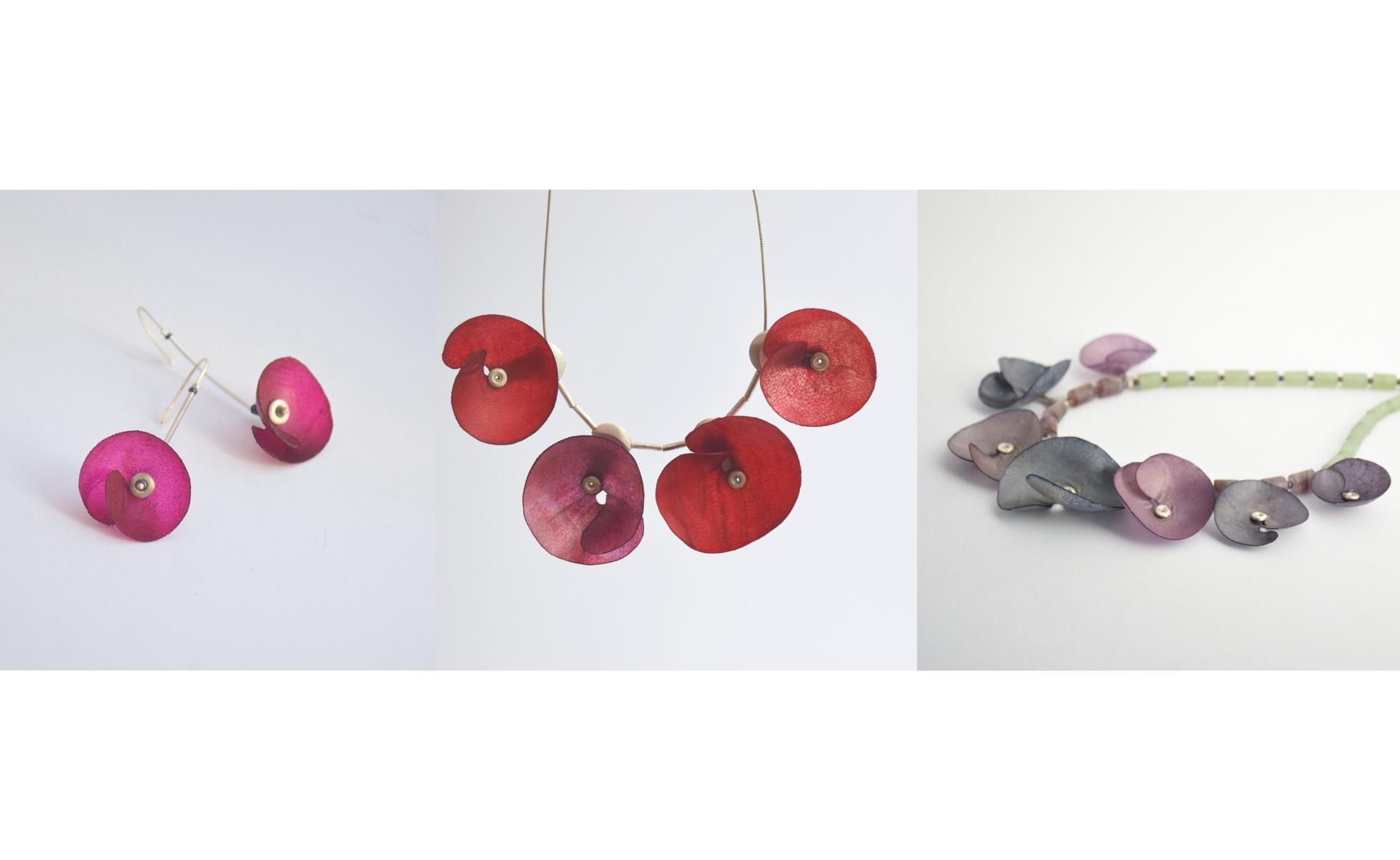
LINY: You realize many exciting and unconventional ideas in your jewelry. What unique techniques do you experiment with, and which collections are closest to your heart?
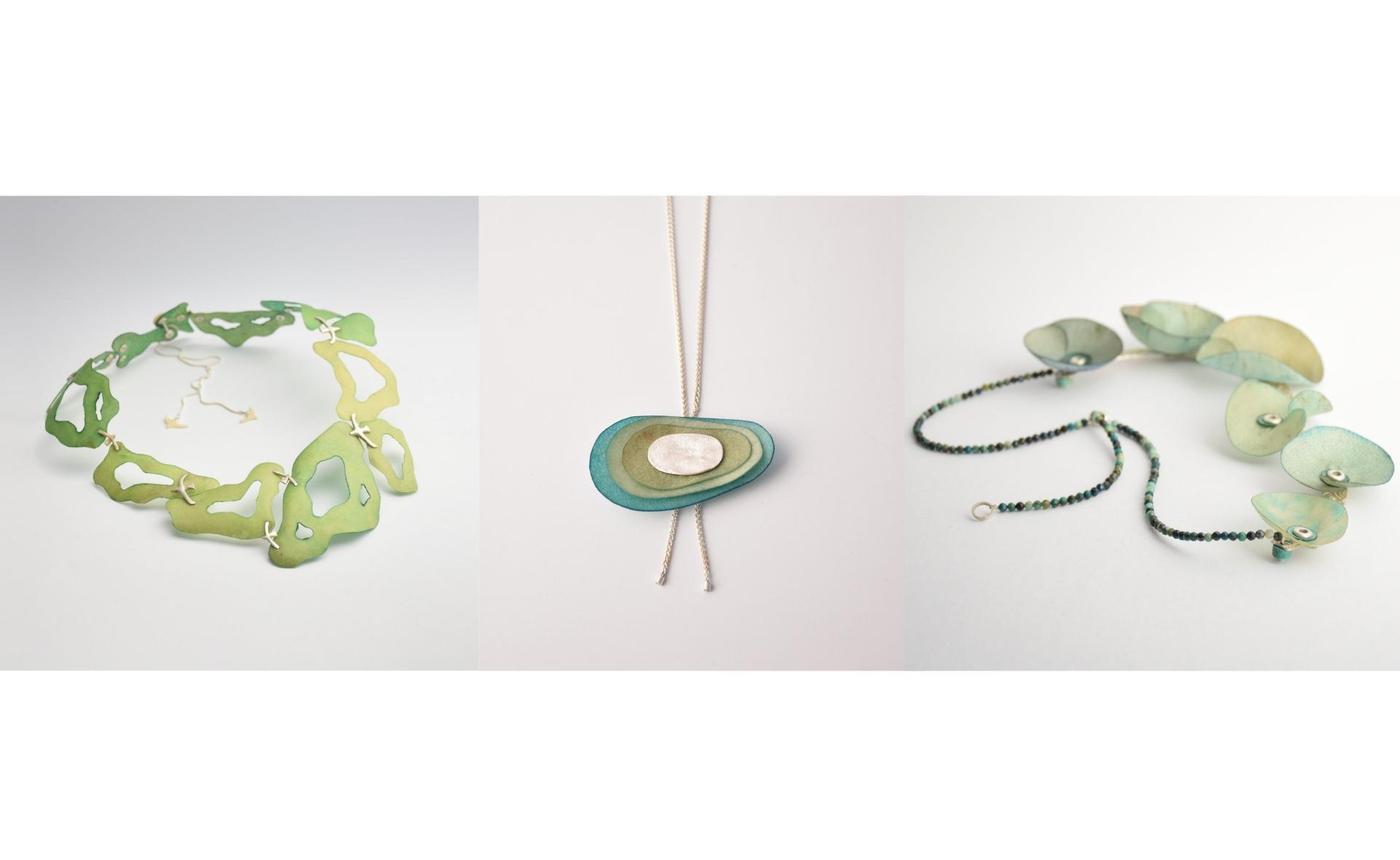
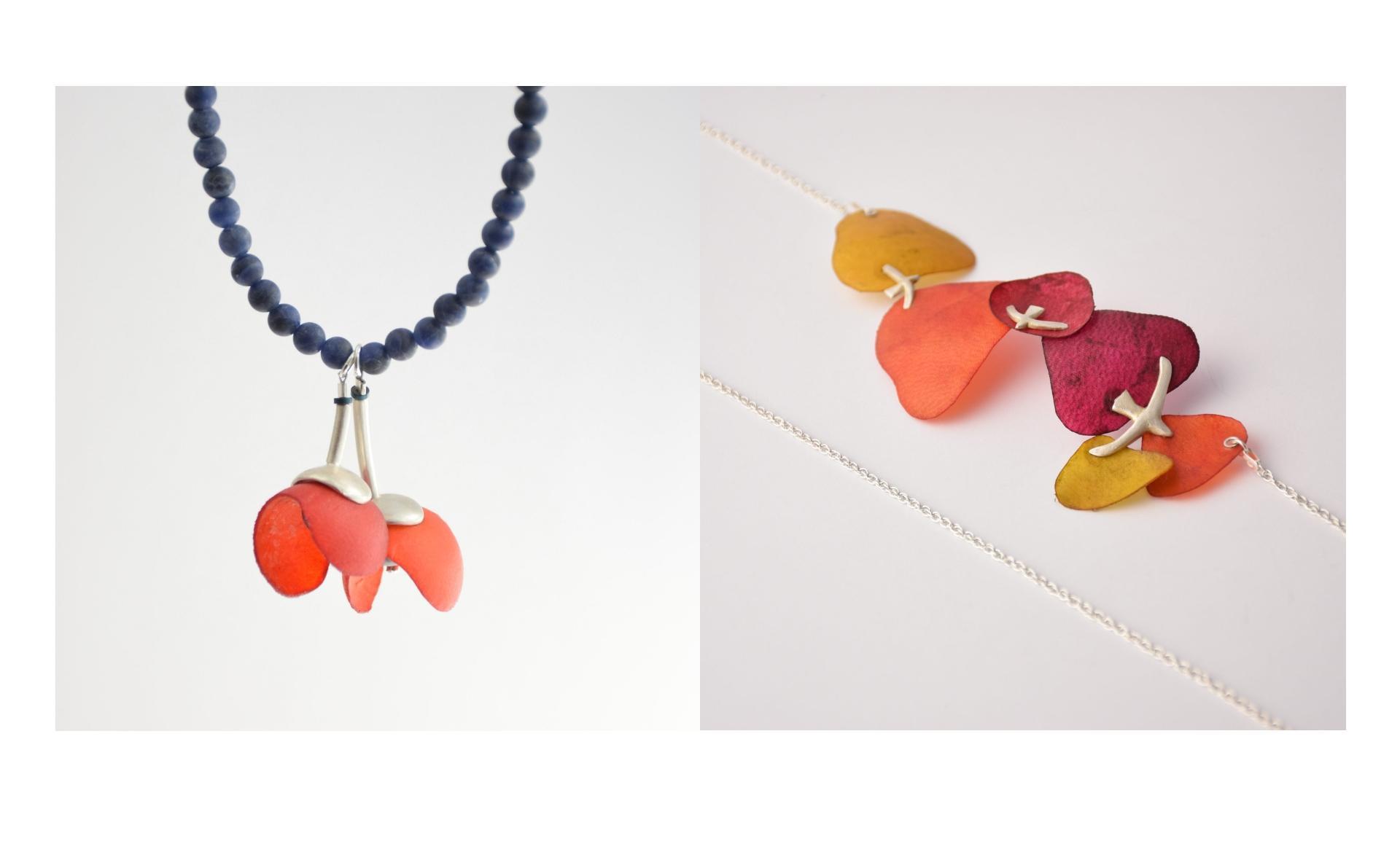
F.K.: I am best known for my unique parchment technique, which represents an entirely new path for me. By stretching and shaping untanned goat leather, I create stable, three-dimensional forms, which are then integrated into precious metal structures. Over the past 20 years, I have developed five distinct collections, all of which continue to evolve. My favorite is the most recent one, the FOREST collection.
LINY: We find your so-called “rescue” collection particularly fascinating and unique. Could you tell us more about its concept and story?
F.K.: I have a passion for exploring old attics and the hidden boxes of antique market vendors. I often find unusual fragments—delicate carvings, Brussels lace, mother-of-pearl buttons. I have created several jewelry series incorporating such elements, including carved objects, seal cylinders, and Egyptian glass figures. The message of these “rescue” pieces is clear, and they tend to attract those who understand the relativity of time, transience, and the importance of preserving memories. I want people to admire the vibrant colors of old embroideries, the intricate detail of Italian stone mosaics, and the refined patterns of broken fans and ivory boxes. If I succeed in creating contemporary, wearable pieces, I can extend the life of these memories for another fifty years.
LINY: Beyond your jewelry collections, we would love to learn more about your other projects, such as coin and award design, or the Friss Termés salon. How do you balance these different types of work?
F.K.: Designing commemorative coins is very dear to me because the larger editions—typically around 5,000 pieces—allow my work to reach a wide audience. It also enables me to engage with my love of history and literature, as thorough research is required. I dedicate one day a week to this work. On another day, I teach drawing and modeling, which I have been doing for 25 years. The rest of my time is devoted to jewelry. I founded the Friss Termés (Fresh Produce) Applied Arts Salon ten years ago in the beautiful Károlyi Castle in Fehérvárcsurgó, with the aim of providing a worthy platform for myself and fellow artists. The goal is to introduce museum-quality functional objects to an appreciative audience. I work intensively on this project each year from September to November.
LINY: Before attracting the attention of the renowned MAD About Jewelry exhibition at the Museum of Arts and Design, you had already gained international recognition. Which exhibitions or awards are you most proud of?
F.K.: I have exhibited in 22 countries so far. Many of these were solo or group exhibitions organized by the former Balassi Institutes, now Liszt Institutes, across Europe. I fondly recall my solo exhibitions in London and Helsinki, as well as group exhibitions in Brussels and Prague that I helped organize. The most important milestones were the JOYA Barcelona Art Jewellery Fair and the SIERAAD Art Jewelry Fair in Amsterdam, which opened doors to further international traveling exhibitions. In 2024, I received the Ferenczy Noémi Award, the highest state honor in my field.
LINY: You also offer workshops and educational programs. Could you tell us more about these initiatives?
F.K.: I have been teaching drawing, modeling, and object design at a private art school for 25 years. I also lead workshops in applied sculpture and design. Since the pandemic, I have been teaching online as well, even in English, reaching students from all over the world.
LINY: Looking back, how challenging was your journey to success? What did it take beyond dedication and perseverance?
F.K.: I don’t feel that I have achieved fame, nor was that ever my goal. My greatest success is being able to do what I truly love, with passion. What I need most for growth is diligence, perseverance, and deep focus.
LINY: What projects are you currently working on, and are there new artistic directions you would like to explore?
F.K.: I am currently working on a mini-series specifically for the MAD About Jewelry exhibition, inspired by the Waldorf Astoria New York. The large parchment earrings reflect the geometric, striped, and checkered Art Deco details of the iconic building. I am interested in many things—I have tried basket weaving, would love to explore textile weaving, and I am also interested in stone sculpture.
LINY: Is there an artist you would like to collaborate with in the future?
F.K.: I enjoy working with glass artist Márta Edőcs, with whom I have already completed several projects. I am also starting a series with photographer Péter Rákosy titled “The Message of Our Jewelry,” which I hope to continue and eventually exhibit internationally. I prefer collaborating with established artists—I am always drawn to those from whom I can learn.
LINY: How do you recharge outside of work?
F.K.: Cycling in the forest, hiking, and traveling.
LINY: What advice would you give to young emerging artists?
F.K.: Humble patience, deep attention, diligence, and perseverance are essential to achieving one’s goals as an artist. Perhaps this is true in all areas of life.