

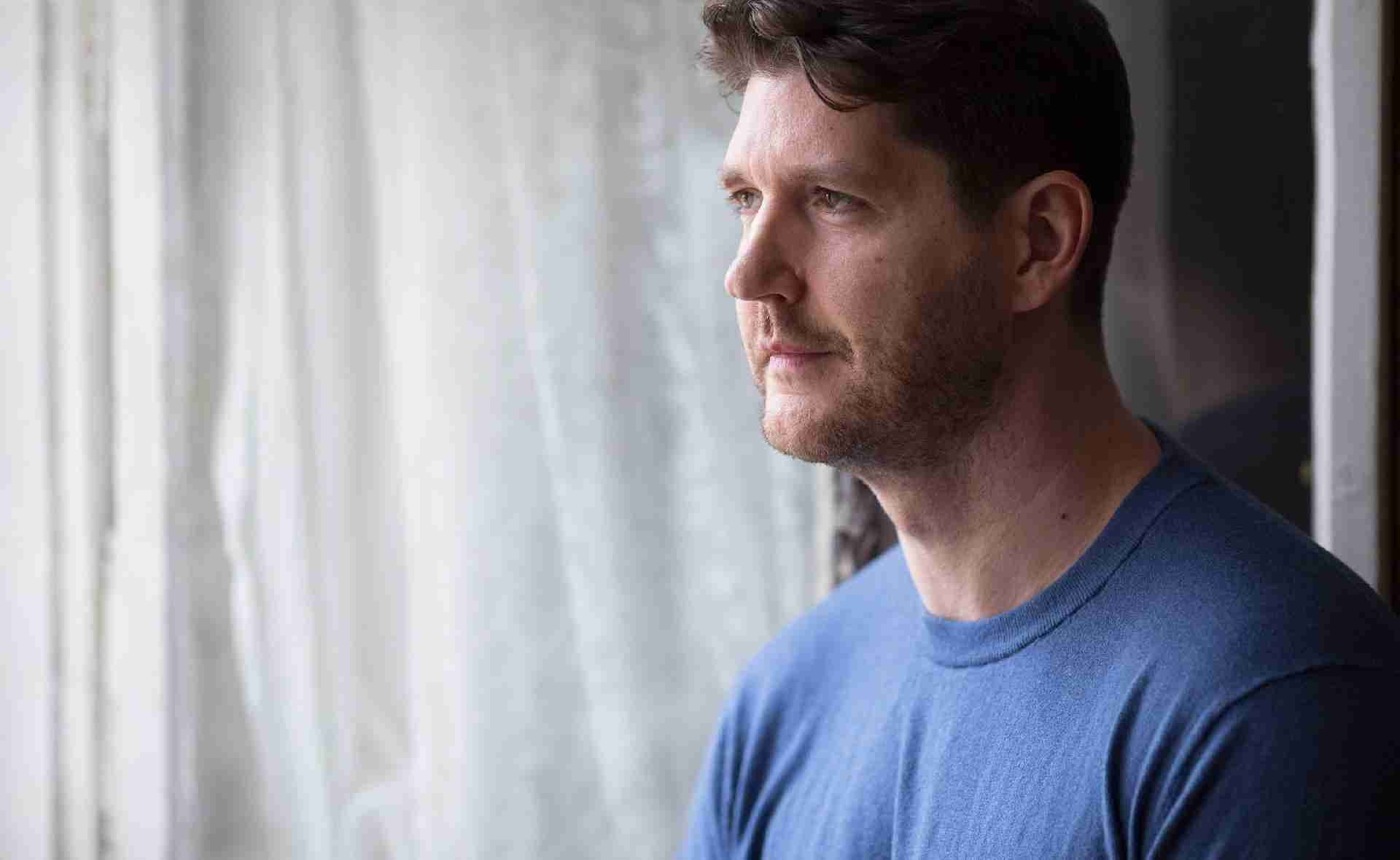
Gergely Kocsis has been writing for almost ten years in a variety of genres and prefers to mix the usual tools to create something new and exciting. Kocsis’s writing has been published in several contemporary literary journals and he is currently working on the publication of his first book. His selected short stories in English will be published by the Liszt Institute in New York in April 2022, translated by Patrick Mullowney.
You have been writing for almost ten years. How did you start your writing career?
I lived in Prague for a year and a half in 2013, and the novel environment, the banal incongruities of everyday situations gave birth to a blog that has survived hundreds of posts and, to my surprise, more and more people started to follow it. Soon enough, thousands of people were reading my posts week after week. Blogging led me more and more towards literary topics, I felt I was no longer satisfied with writing only about myself. I wanted to tell stories about the events of the world around me, about people, memories, momentary feelings that caught me and took on a life of their own in my head.
When did you start writing fiction?
Four or five years ago, I started my blog, Szarkalábak ( - Magpie's Feet), which already published fiction, but I felt ill-equipped. I knew what I wanted to write, what the mood of a scene was, what the characters looked like, but I couldn't articulate it well, so I joined Gergely Péterfy's literary academy to polish my style and my writing tools. I consider Gergely my mentor and since then, my friend. I have learned a great deal from him, perhaps the most important being that writing is like a growing tree. It has its beauty as a shrub, but it takes decades for the trunk to solidify and reach its true splendor, reaching for the sky. I'm still at the beginning of this journey, although ten of my short stories have already been published in several online and print media, but year after year, as I grow the rings, I smile and rewrite my earlier texts, probably producing my best writing fifty years after my death.
You were actively involved in the launch of the Felhő Café literary site, how did that happen?
It is difficult for budding writers to get a first publication in Hungary, which is why Gergely Péterfy and his wife Eva Péterfy-Novák founded the online literary journal, Felhő Café at the end of 2020, building on the achievements and output of their own literary academy. Felhő Café takes advantage of the technological possibilities of the 21st century and provides a literary workshop as well as a platform for the members of the academy to publish. In addition to texts, readers can also watch live literary discussions, podcasts and video recordings. I was happy to help Gergely and Éva polish the editorial system first as an editor, then as a host of my own podcast series, Felhő Café Portraits, where I talk to successful authors from the Péterfy Academy about their writing careers and literature.
What do you consider your strength as an author? How do you communicate with your audience?
I love it when the mood of a text pulls you in, when after a few sentences you find yourself in someone else’s shoes, in a world you have perhaps never been to before. I consider myself a sensitive person. Someone once told me that I write like a painter. I think my strength as an author lies in my ability to capture the important parts of a scene, to create a certain atmosphere. I'm a very disciplined person, and I wrote the first manuscript of my novel in seven months, following a strict daily routine. Literature is very important to me, I love to read challenging works and I strive to create them myself.
During COVID, the opportunities for personal conversations have diminished, and Hungary - unlike the United States, for example - has no literary agents. There is little choice for a writer just starting out but to use social media to get readers, because without it, getting published is almost impossible. You have to build yourself up. I should be doing more of that, but I much prefer to spend that time writing, and I still think it's important to have a dialogue between author and reader.
What is your creative process for choosing a subject?
Mostly the subject chooses me. Often at the most unexpected moment, a flash of lightning happens, something clicks in my brain and a thought, a mood, a story idea takes shape. I have to jot them down immediately or they slip away. I regularly re-read these germs of thought, and when I want to write, I work them into a story. Recently, I have written several short stories about violence and abuse against women, one of these texts has also been published in Népszava's Open Sentence. The key motif is a dream in which the protagonist is floating in a bubble, and the idea came from a public bath where children were playing in the water, rolling in an 8-foot transparent rubber ball. I really liked this microcosm and it was fit to portray the state of mind of an emotionally damaged woman.
What's on your mind these days? What are your plans for the future?
I am currently working on finishing my novel. The working title is The Legend of the Crow, I don't know if it will remain final, perhaps yes, but for now I'm concentrating on finalizing the text. It was very difficult to find a publisher for the manuscript last year because it's a mixed-genre story, set ten years after the First World War, where Vilmos Róth, a detective, is called to a sleepy town to investigate a murder. As he unravels the case, his situation becomes increasingly hopeless and the supernatural intrudes more and more into the story. When Gergely Péterfy and I were working on the concept of the novel, we made a conscious effort to mix literary styles that are very far apart - crime fiction with fantasy, and even horror in some places, to create a disturbing text and atmosphere. Finally, Europa Publishing saw potential in it and, if all goes well, it will be published sometime later this year.
I have two novels waiting for me afterwards: one is a prequel to The Legend of the Crow, in which we learn where Vilmos Róth came from, in a similarly mystical story, and the other is a manuscript that has been lying in a drawer for two years, an autobiography set during the 1990s. I have yet to see which one I will pick up. But before that I'd like to write short stories again, I like variety, and a novel takes a year and a half or two years to complete, with lots of impulses in between I can only record. Short story is a genre very close to my heart and I have neglected it quite a bit lately.
It is an important milestone in my life to have two of my short stories published in a foreign language, thanks to the Liszt Institute in New York. I hope it will also appeal to overseas audiences. In some way, both of them are about escaping, living in a fast-paced, threat-filled world from which I, too, long to return to a calmer, more peaceful and perhaps simpler life. It is impossible to ignore the fact that there is a war going on in Eastern Europe. There is so much horror pouring in from everywhere that we have to look for little pockets of beauty, even if only for a few minutes.