

Hungarian cinema continues to make a significant impact internationally, with exciting new films and restored classics attracting attention across film festivals around the world. From acclaimed directors such as László Nemes Jeles and Ildikó Enyedi to innovative short films and ambitious restoration projects, Hungary’s film industry demonstrates remarkable creativity and cultural vitality.
We are proud to shine a light on this vibrant scene and share a selection of outstanding recent works that demonstrate why Hungarian cinema remains something to closely follow in the global film landscape.
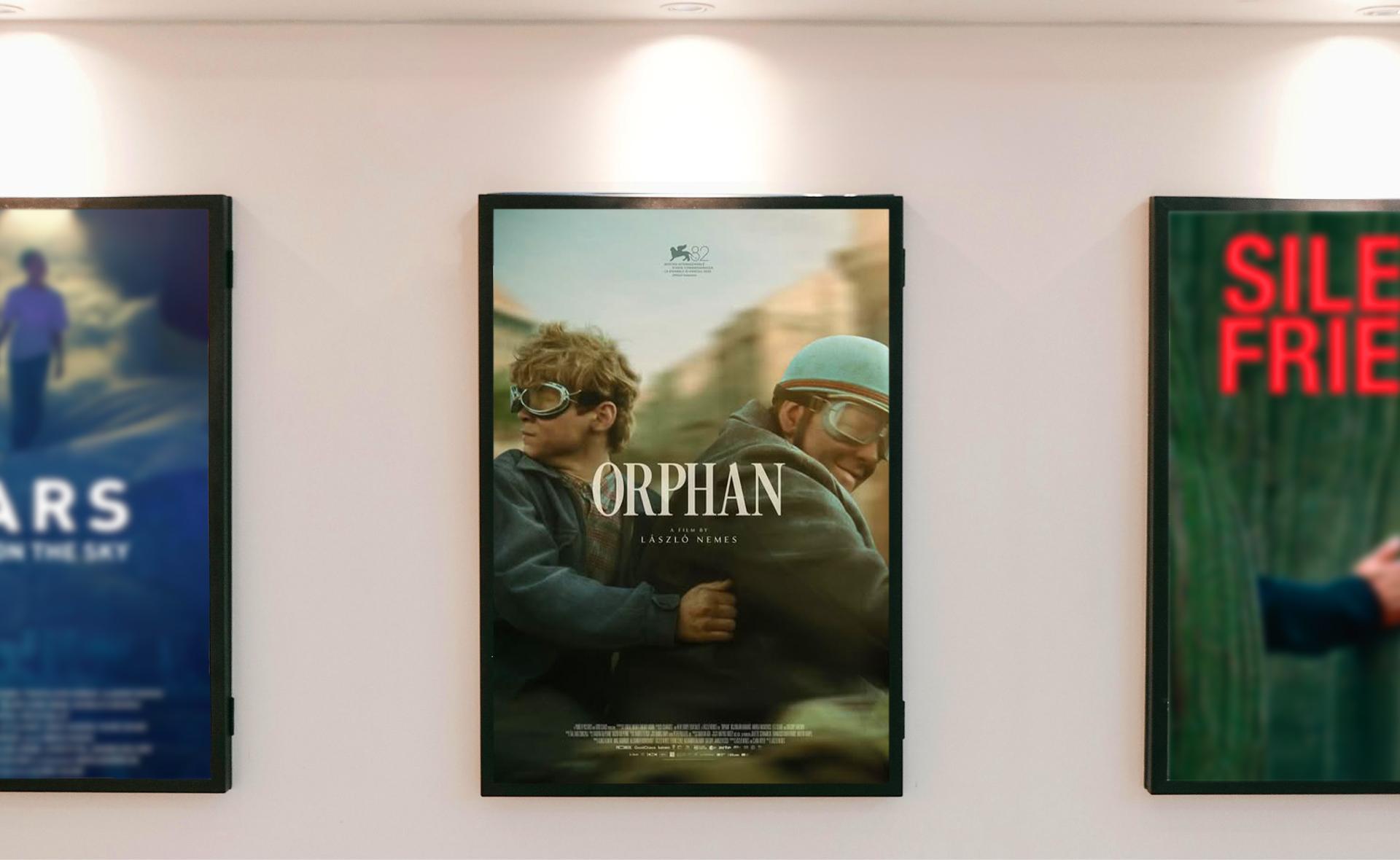
Orphan (Árva), 2025
László Nemes Jeles - Oscar, BAFTA, and Golden Globe-winning director and writer - returns with his new film Orphan (Árva), nominated for the Golden Lion at the 82nd Venice International Film Festival in 2025 and selected as Hungary's official submission for Best International Feature Film at the 2026 Oscars.
Nemes’ third feature follows a young boy in 1957 Budapest, just after the uprising against the Communist regime in 1956. Andor (Bojtorján Barabás), raised by his mother (Andrea Waskovics) with idealised tales of his deceased father, has everything turned upside down when a brutish man (Gregory Gadebois) arrives, claiming to be his real father. The film’s setting and emotional core are woven into a haunting exploration of identity and survival, told through Nemes’ signature cinematic language.
What makes Orphan unique is not only its deeply personal roots - partly inspired by Nemes’ own father's history in post-war Hungary - but also how it reflects the lingering trauma of 20th-century Central Europe. Unlike many historical dramas focused solely on political events, Nemes offers a poetic, dark portrait of a child trapped in a world that feels both brutal and inscrutable.
While embodying Nemes’ artistic signature - meticulous period detail and psychological depth - Orphan also stands out through Mátyás Erdély’s 35mm cinematography and the creative collaboration with the NFI Film Laboratory, which equips the production with a distinctive visual style. Utilising the facility’s bleach bypass technique, the film crafts a vivid, textured portrait of 1950s Budapest, blending historical accuracy with a nostalgic atmosphere that elevates the narrative’s emotional depth. This careful craftsmanship highlights Hungary’s rising profile as a hub for high-quality, internationally competitive film production, positioning Orphan as a milestone in Hungarian filmmaking.
Orphan is set to be released in Hungarian cinemas on 23 October 2025, with a UK premiere planned at the BFI London Film Festival on 14 October 2025, followed by an expected subsequent theatrical release to bring Nemes Jeles' latest work to international audiences.
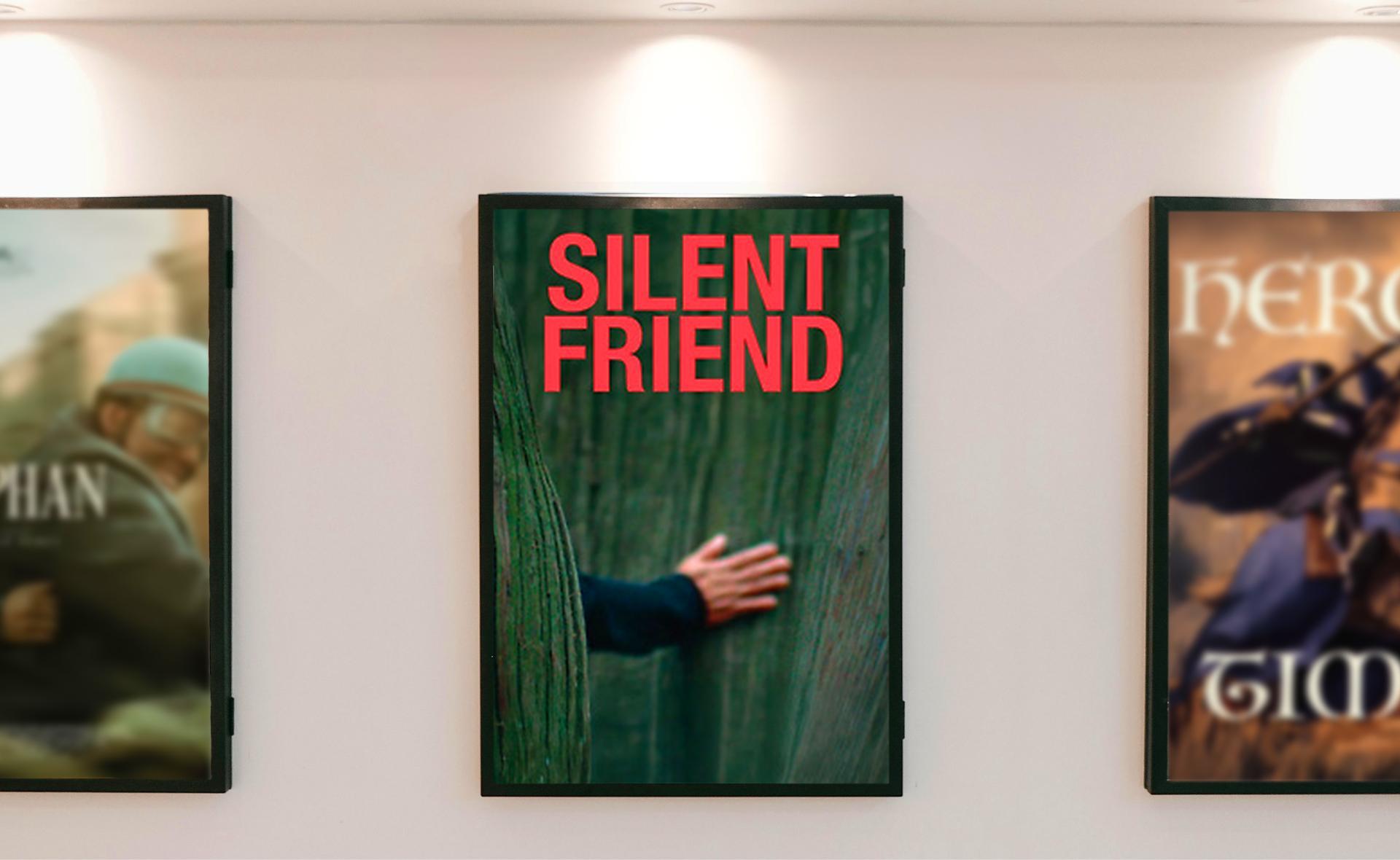
Silent Friend (Csendes barát), 2025
Ildikó Enyedi’s new film, Silent Friend, claimed six awards at the 82nd Venice International Film Festival.
On the day of its premiere, the 5th September 2025, Enyedi’s new film received four awards at the Film Festival, including the FIPRESCI Prize for best film in the main competition, and three awards from the independent jury: the Interfilm Award, given for promoting interfaith dialogue; the Student Jury Prize for outstanding artistic value and distinctive visual style; and the Green Drop Award, which recognises films highlighting ecological values and sustainability. What’s more, the film has also secured the Edipo Re Inclusion and Sustainability Award, while Swiss actress Luna Wedler won the Marcello Mastroianni Prize for best emerging actor.
Ildikó Enyedi’s Silent Friend draws a sensitive and philosophical parallel between humans and plants. An old tree stands in the middle of a botanical garden. It is lonely, just like the other inhabitants of the garden—thousands of kilometres away from their original habitats, brought here for us to admire and observe. But as we observe them, they observe us in return. They bear witness to our brief, messy, noisy, and restless lives. The film tells three separate stories, each capturing a tentative encounter between a human and a plant—moments when two radically different forms of perception briefly connect. The human protagonists of the film, much like the plants in the botanical garden, are outsiders, solitary souls. And just like them, they too long for connection.
Silent Friend stars Tony Leung Chiu-Wai, recipient of the Venice Film Festival’s Lifetime Achievement Award in 2023, alongside Luna Wedler, Enzo Brumm, Léa Seydoux, Johannes Hegemann, Sylvester Groth, Rainer Bock, and Martin Wuttke. The screenplay was written by Enyedi herself. Cast and crew include Gergely Pálos as cinematographer, Károly Szalai as editor, Imola Láng as production designer, Peri De Braganca as costume designer, Gábor Keresztes and Kristóf Keresztes as composers, Béla Kingl as VFX Supervisor, and Asher Irma as casting director.
While described as lyrical, the director emphasised that the film’s subtle humor was also appreciated during its Venice screenings. “It is a lyrical work, but the audience understood its deepest layers by responding to the humor. That means they got it.” At the press screening before the gala, Enyedi said that a “very dear aspect of the film came to the fore: at the moments where I hoped they would laugh, they did—so they appreciated its humour.” “Humour is important: laughter is essentially a moment when one grasps something not through meticulous logic, but all of a sudden, through wonder. They marvel at what is new and surprising, find delight in it, and express this joy involuntarily. Laughter is a moment of understanding. Social communication brings people closer when they can laugh together at something,” the director explained.
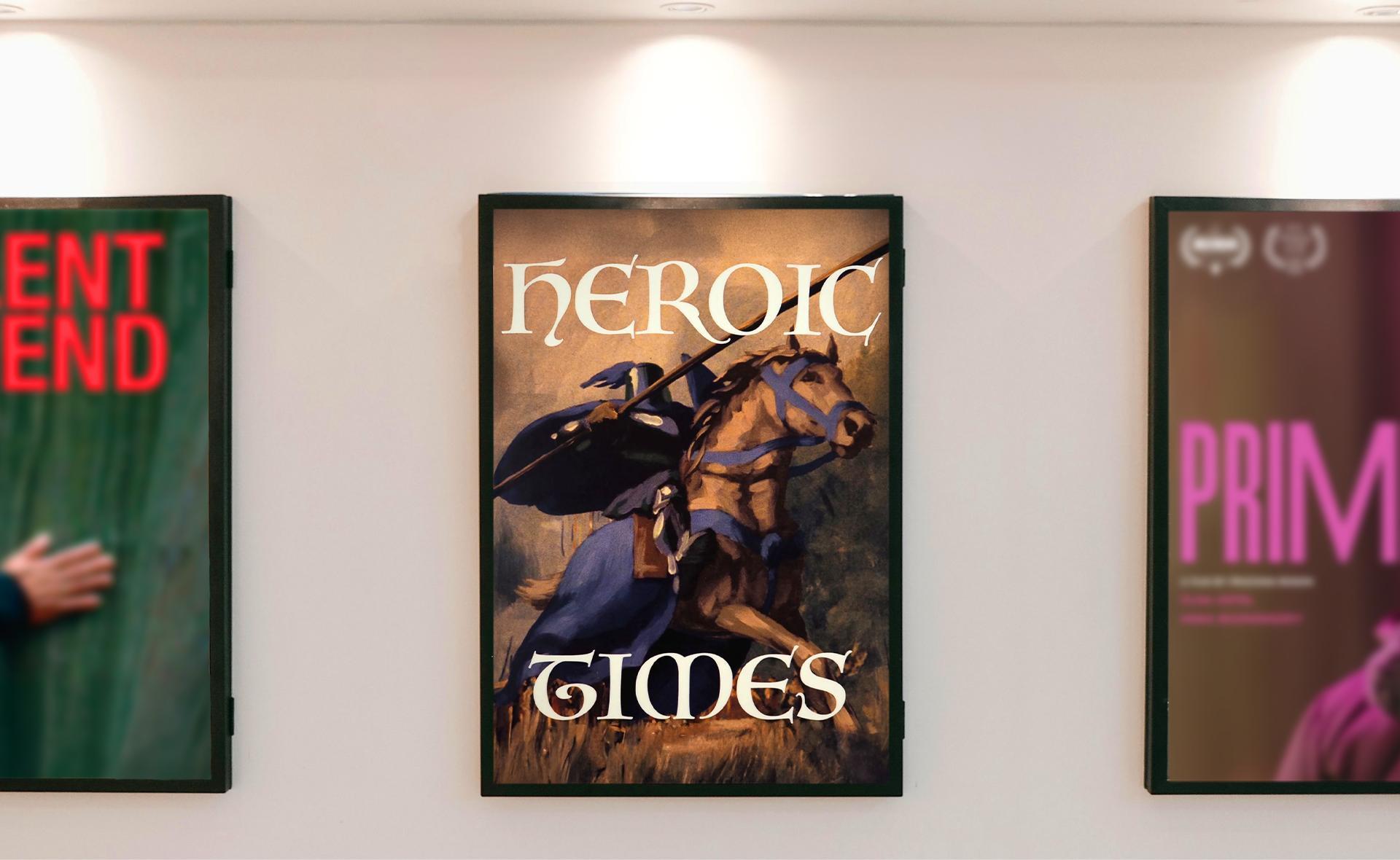
Heroic Times (Daliás idők), 1984
With so much focus on new releases, it’s easy to overlook Hungary’s National Film Institute (NFI)'s ambitious restoration programme, reviving key works from the country’s cinematic heritage - one standout being József Gémes’s animated epic, Heroic Times (Daliás Idők - 1984). Set to screen at the Barbican in London on 22 October 2025 as part of their “Animation at War” series, the film returns to the big screen in a newly restored version, offering UK audiences a rare chance to see this landmark of Hungarian animation.
Based on János Arany’s (Hungarian poet and translator) classic Toldi trilogy (1846 – 1880), Heroic Times draws on one of the most important works in Hungarian literature. The poems follow Miklós Toldi, a legendary 14th-century strongman whose story reflects national ideals of strength, resilience, and moral struggle. By adapting this epic for animation, director József Gémes created a powerful visual homage to Hungarian identity and historical memory.
Heroic Times was produced by the renowned Pannónia Film Studio, Hungary’s leading animation house at the time, and took over four years to complete. Under Gémes’ direction, the film was brought to life almost entirely through oil paintings on glass - a labour-intensive process carried out by just ten artists, who built complex scenes by layering multiple painted glass plates to add depth and movement, with each frame carefully captured on film to bring the images to life. Over the course of production, the team created around 30,000 individual cels (transparent sheets traditionally used in hand-drawn animation) and 600 detailed backgrounds, making Heroic Times a true landmark of Hungarian animation.
Restored in 4K from the original camera negatives, Heroic Times now returns in vivid colour and with English subtitles, thanks to the work of the NFI’s Film Archive. György Ráduly, director of the archive, sees restoration as more than a technical exercise. While the process involved scanning the original negatives, repairing damage, and restoring colour frame by frame, the goal was always to bring these works back into public view and connect them with new audiences, both in Hungary and internationally.
If you’re interested in discovering a landmark of Hungarian animation history - and seeing how fine art meets poetry on screen - Heroic Times is not to be missed.
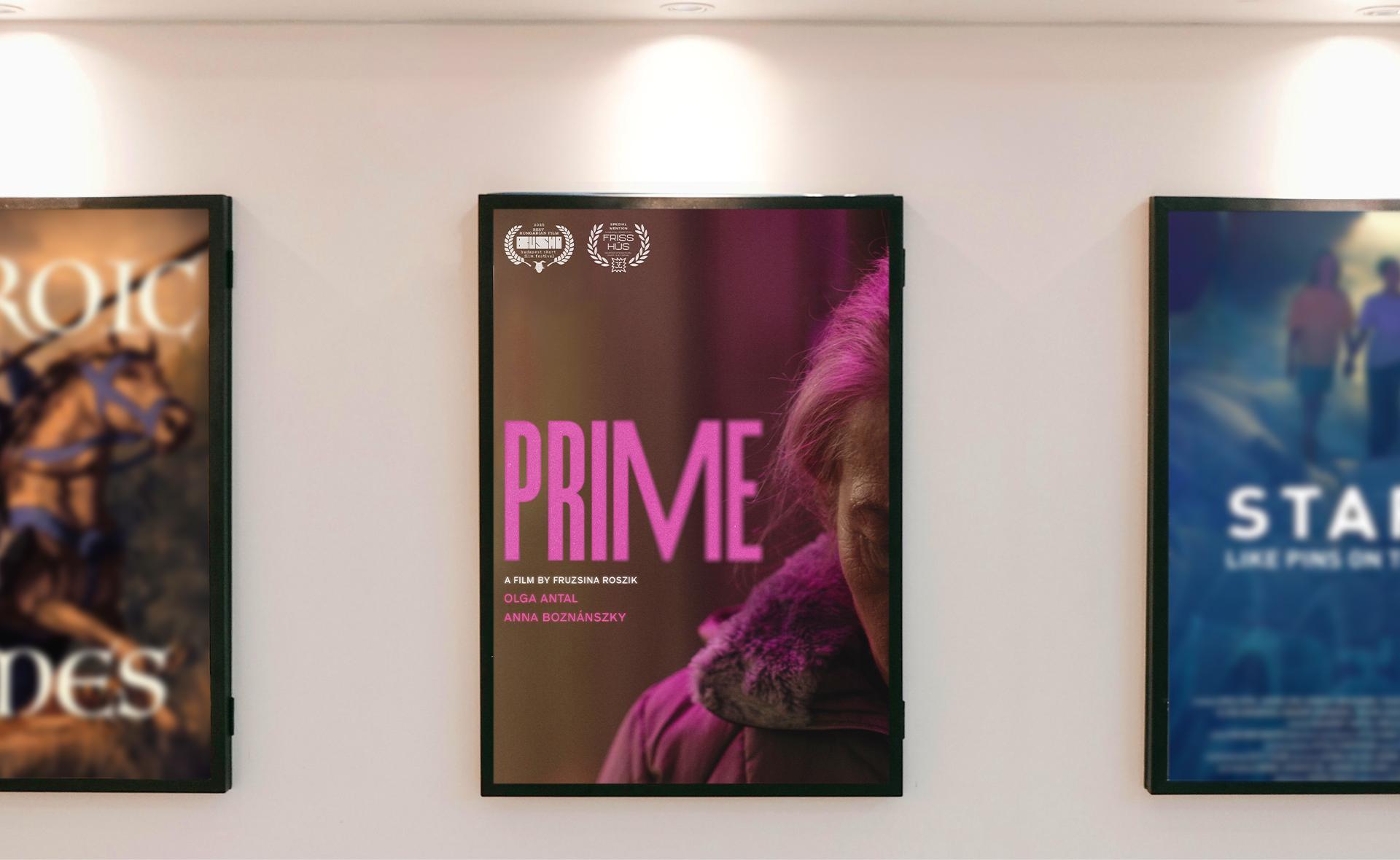
Prime (Tavasz), 2024
Fruzsina Roszik’s 2024 short film Prime (‘Tavasz’) won the prize for Best Hungarian Short Film at the 2025 Budapest Short International Film Festival (BuSho). The film has also received a special mention at the XII. Friss Hús Budapest International Short Film Festival - Hungary’s only Oscar-qualifying film festival - last year. The film has been selected for this year’s In Short European Short Film Festival, organised by EUNIC London.
This year’s theme, Opening Doors, will bring together 19 films from across the continent, exploring topics of diversity, inclusion, and access. Curated by Lillian Crawford, the programme unfolds across three strands—Sharing Memories, Breaking Boundaries, and Challenging Perspectives—each offering a distinct lens on European cinema today.
The film festival will take place at London’s Regent Street Cinema on 7th-8th November 2025. Keep an eye out for updates regarding the programme, and make sure not to miss out on Roszik’s UK debut of Prime - where the director will be present.
Zsuzsa, a furniture shop saleswoman, escapes into the daily routine to avoid the monotony of a life without human connections. One day, something happens that makes her question her choices and reminds her that she is responsible for her own happiness.
Director: Fruzsina Roszik
Writer: Fruzsina Roszik, Júlia Bácskai
Cinematographer: Kristóf M. Deák
Cast: Olga Antal, Dominika Rezes, Anna Boznánszky, István Fazekas, János Szemenyei, Nóra Diána Takács, Ildikó Tóth, Szilvia Molnár, Tamás Balogh, Kata Káli
Fruzsina Roszik (1987) is an actress and director, known for Tavasz (2024), Imprint (2020), and Maradunk.
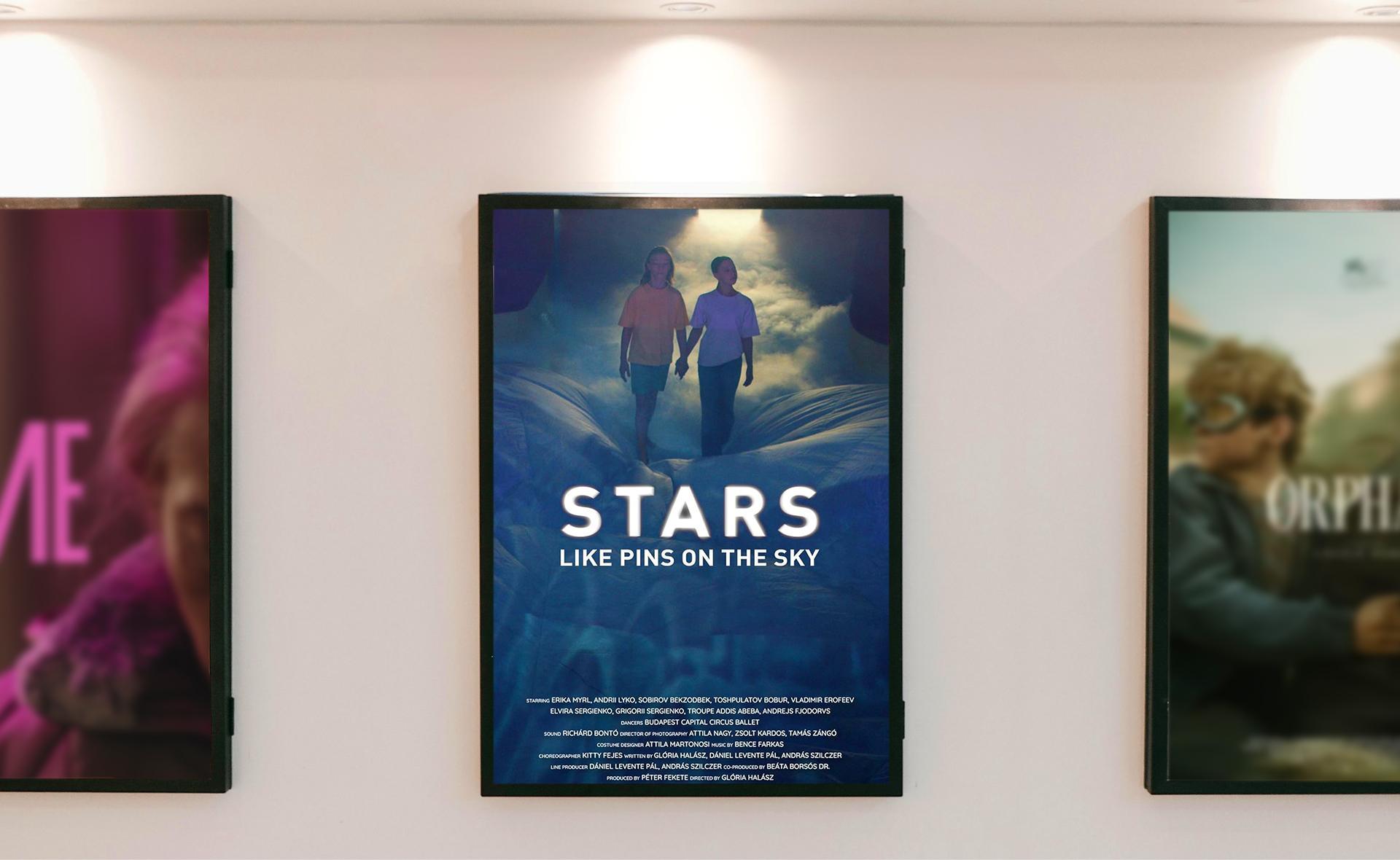
Stars Like Pins on the Sky (Csillagok, égbeli tűk), 2025
Glória Halász’s short film Stars Like Pins on the Sky, produced in collaboration with the Capital Circus of Budapest, offers a lyrical yet haunting metaphor for humanity, swept into the chaos of war, yet shouldering the immense responsibility of fostering peace. The film reimagines and expands upon the scenes and performers of the highly acclaimed circus production of the same name, directed by Péter Fekete, which drew over 150,000 spectators at the Capital Circus of Budapest and received both critical and popular success.
Through the artistry of circus performers and dancers from three continents and five countries - Ethiopia, Hungary, Latvia, Russia, and Ukraine - the film delivers a powerful message in the universal language of circus and dance: we are at a critical juncture. If we do not awaken to the urgency of this moment, the sky will collapse, and the earth will be left desolate. Yet hope remains. We still have time to act - to protect what matters most: our values, our treasures, our loved ones, our heritage, and our shared humanity - and to rediscover the art of care, compassion, and stewardship before it’s too late.
The film had its world premiere at the 49th Open Air Filmfest Weiterstadt in Germany - often referred to as the “Woodstock of Short Films” - then was officially selected for the 19th I Will Tell International Film Festival in London, where it was screened on 20 and 27 September.