The Liszt Institute Brussels started the year with sold-out events
The Liszt Institute Brussels welcomed its visitors with a rich cultural event series in January and February 2026: the offerings ranged from the celebration of György Kurtág's 100th birthday to the projection of Béla Tarr's classic film Sátántangó, a conference on Roma-Jewish folk music traditions and light installations. The 10th anniversary concert of the Hungarian-Belgian Jazz Club and the contemporary Hungarian light art works presented as part of the Bright Brussels Festival, also celebrating its 10th anniversary this year, further strengthened Hungary's cultural presence in the European capital.
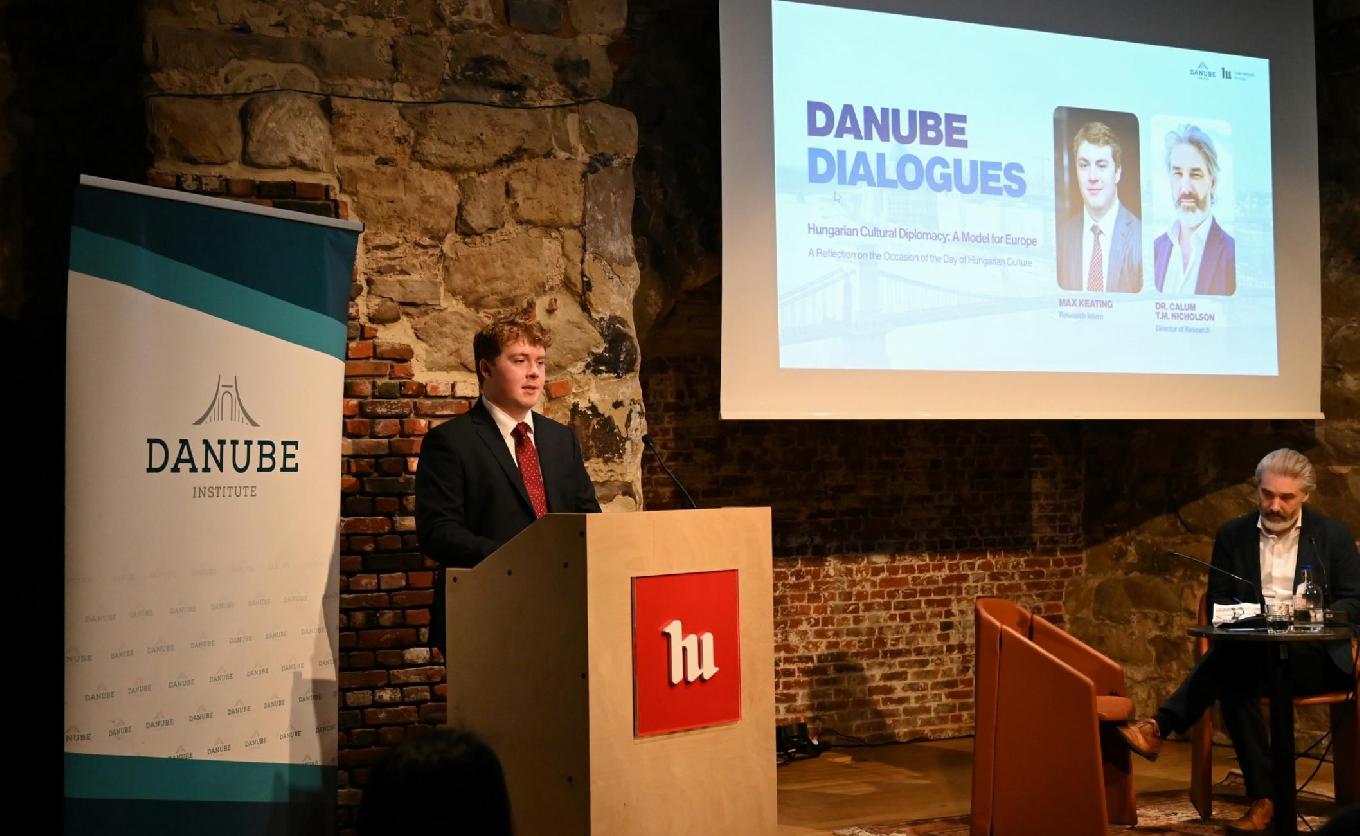
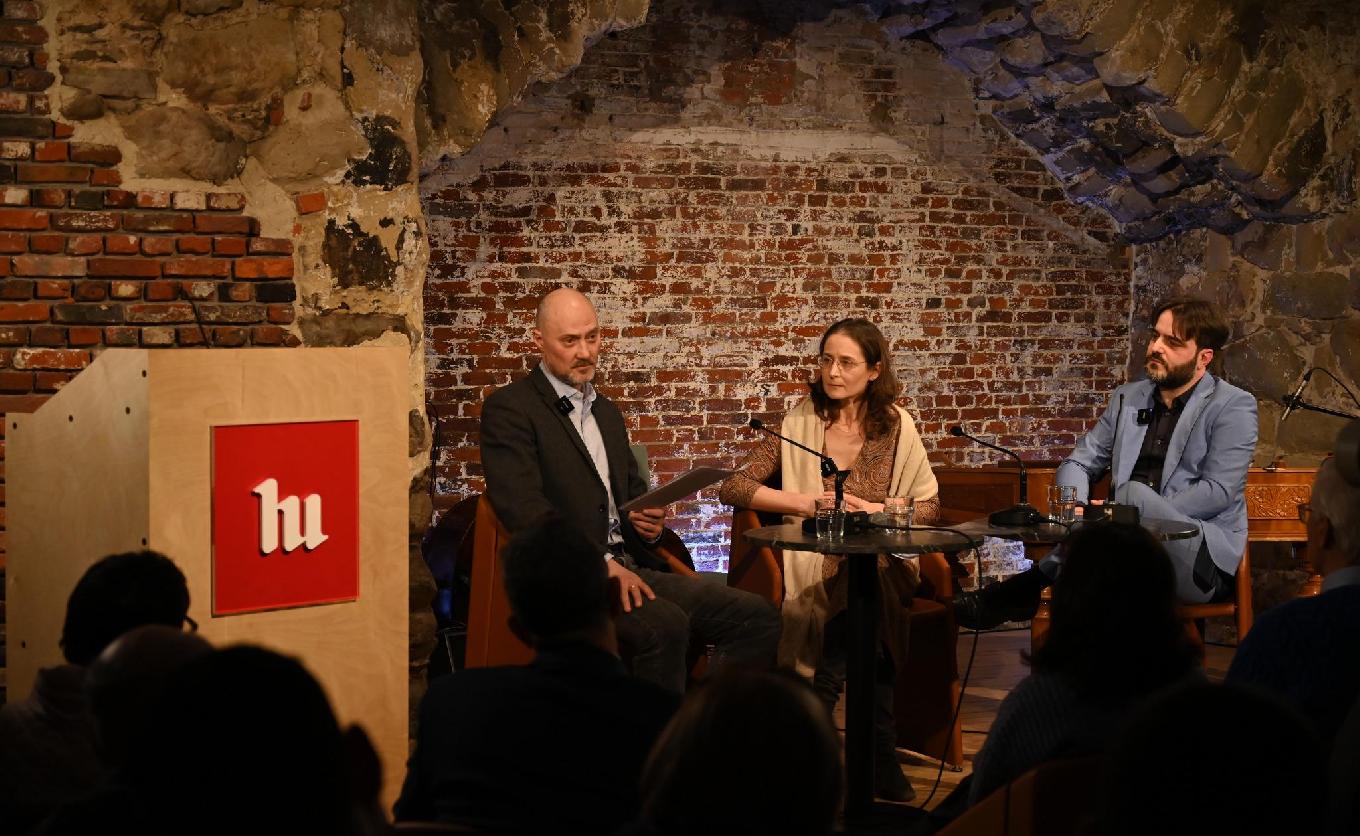
On January 23, the Liszt Institute Brussels hosted the latest event of the „Danube Dialogues” conference, entitled "Hungarian Cultural Diplomacy: A Model for Europe." Based on a Memorandum of Understanding signed in December 2025 between the institute and the Budapest-based Danube Institute, the Danube Dialogues series of conference will include six professional lectures throughout 2026. The speaker at the January event was Max Keating, a researcher at the Danube Institute. The lecture reviewed the history and current functioning of Hungarian cultural diplomacy, presenting how Hungary's cultural strategy has developed from the initiatives associated with Kuno Klebelsberg at the beginning of the 20th century to nowadays. The program also discussed how cultural events, educational institutions and international cooperation contribute to strengthening Hungary's international role.
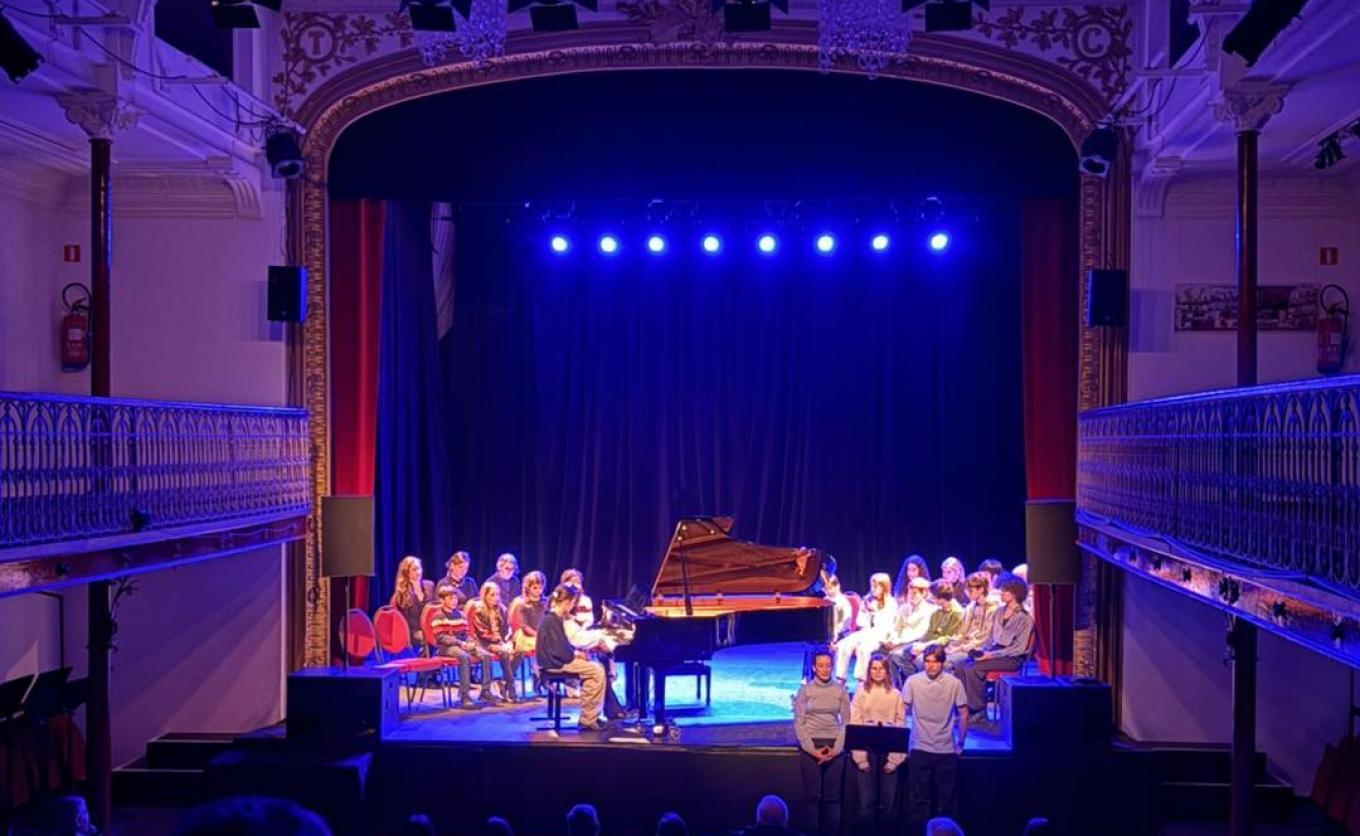
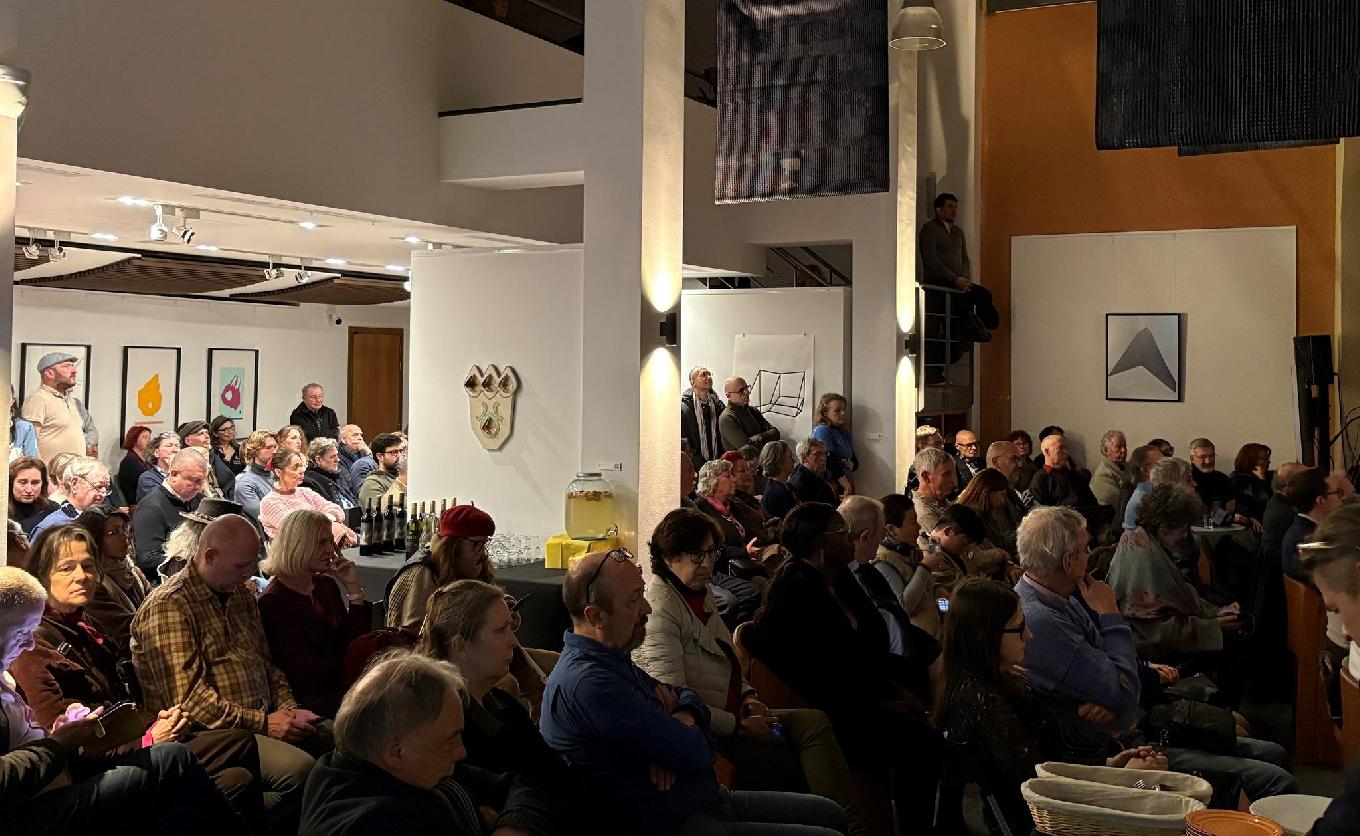
On January 24, the Le Senghor Cultural Center hosted an evening-long musical and educational program celebrating the 100th birthday of the world-famous Hungarian composer, György Kurtág in Brussels. The event was organized by the Liszt Institute in connection with the Day of Hungarian Culture with the aim of promoting Hungarian music, and was attended by more than 300 people. The evening began with a concert by young pianists playing pieces from "Játékok" (Games), followed by a lecture by Philippe Albéra on the composer's oeuvre. Laurence Mekhitarian also played during the program, and finally, Wibert Aerts and Katrien Baerts, accompanied by visual elements, performed „Kafka Fragments”. Ambassador Dr. Tamás Iván Kovács gave a speech at the event, which was also attended by Zsófia Kovács, director of the Institute, and her colleagues.
In memory of Béla Tarr, the Hungarian film director and winner of the Kossuth and Béla Balázs awards, who passed away on January 6, 2026, the institute screened his movie entitled "Sátántangó" on January 31, which is considered one of the most significant and consistent works in contemporary film history. The more than seven-hour-long black-and-white film, based on the novel by Nobel Prize winner László Krasznahorkai, has become a defining piece of international cinematic history. During the evening, the film was shown in Hungarian with English subtitles. The projection was organized in cooperation with the National Film Institute, giving the audience the opportunity to see one of the outstanding works of Hungarian cinema on the big screen.
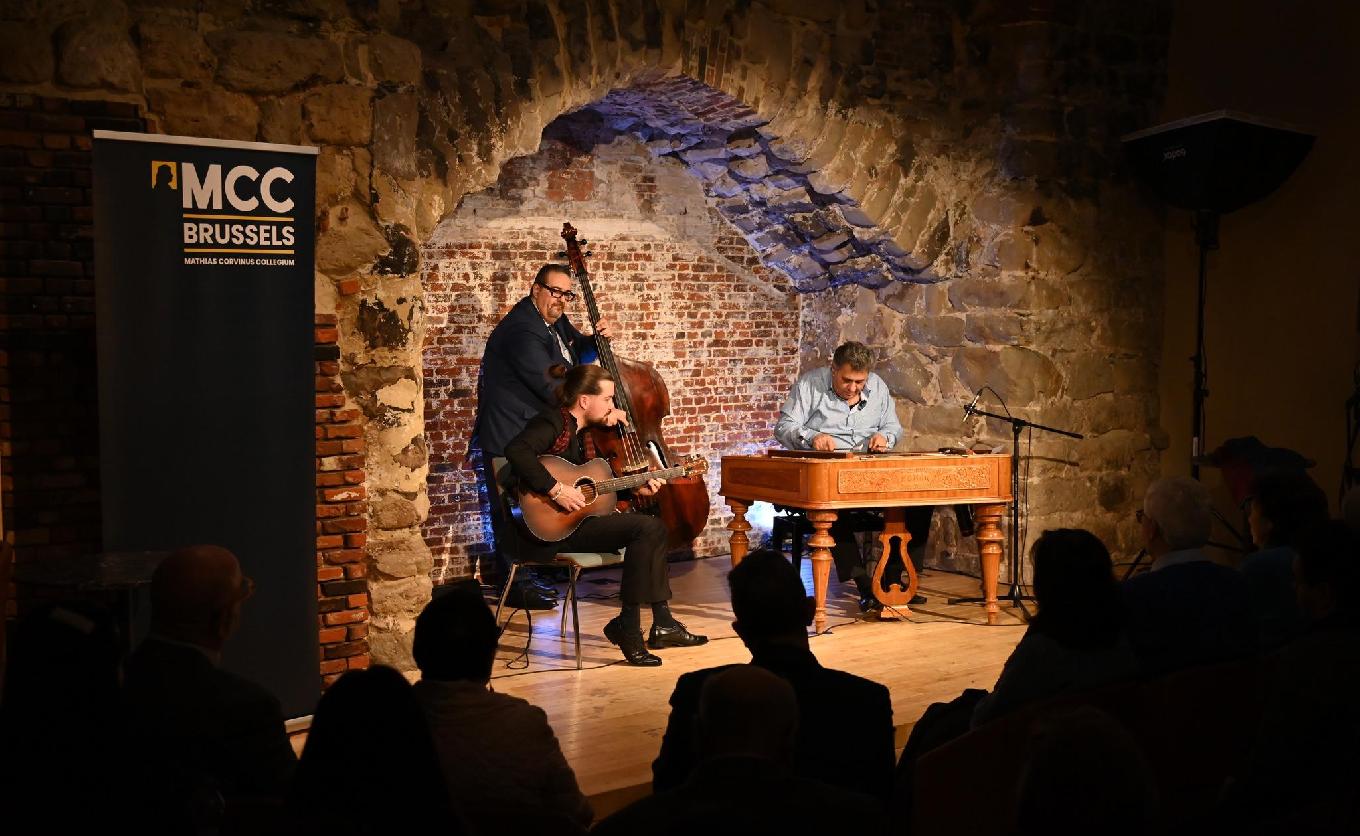
On February 4, 2026, the Brussels institute, in collaboration with MCC Brussels, organized a conference entitled "Loss and Revival: A Roma-Jewish Musical Journey through Transylvania," which presented the rich and intertwined heritage of Jewish, Roma, and Hungarian folk music traditions in Transylvania. The event was based on the recognition that, during centuries of coexistence in Transylvania, cultural traditions – especially in the field of folk music – have become inextricably intertwined. Jewish and Roma musicians played a key role in this process: although most Jewish musicians disappeared from Eastern Europe after World War II, their traditions were preserved and revived by Roma musicians, who combined them with Jewish melodies from other regions. The panel discussion focused on the Jewish folk music traditions preserved by Transylvanian Gypsy musicians and the constantly evolving klezmer genre. Ethnographer and violinist Levente Major (Üsztürü band) and Eduardo Tonietto, artistic director of Brussels Muzieque participated in the panel. The discussion was followed by a concert featuring Jewish melodies interwoven with Roma, Hungarian, Romanian and other musical influences. The band members were Giani Lincan on cimbalom, Gábor Ladányi on guitar, and Vilmos Csikós on double bass.
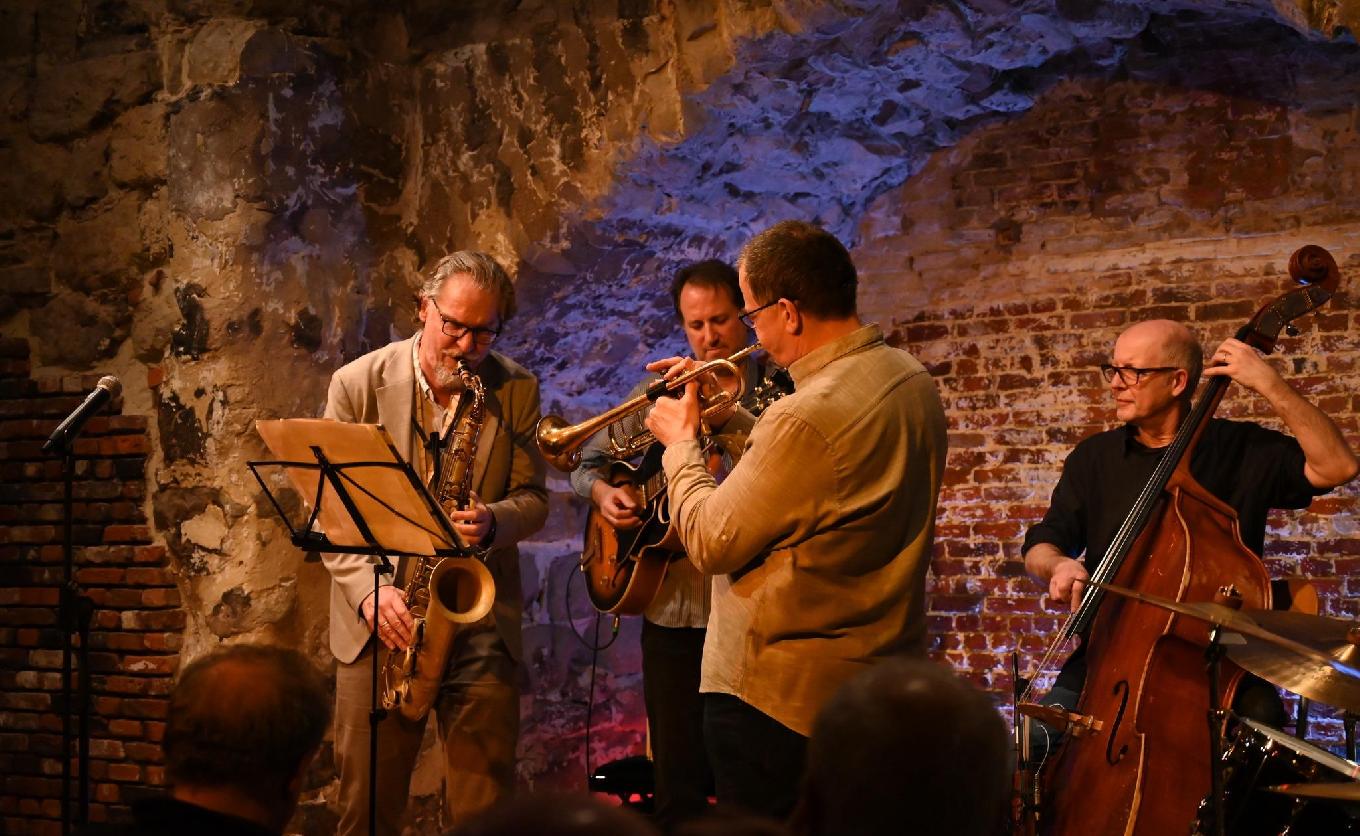
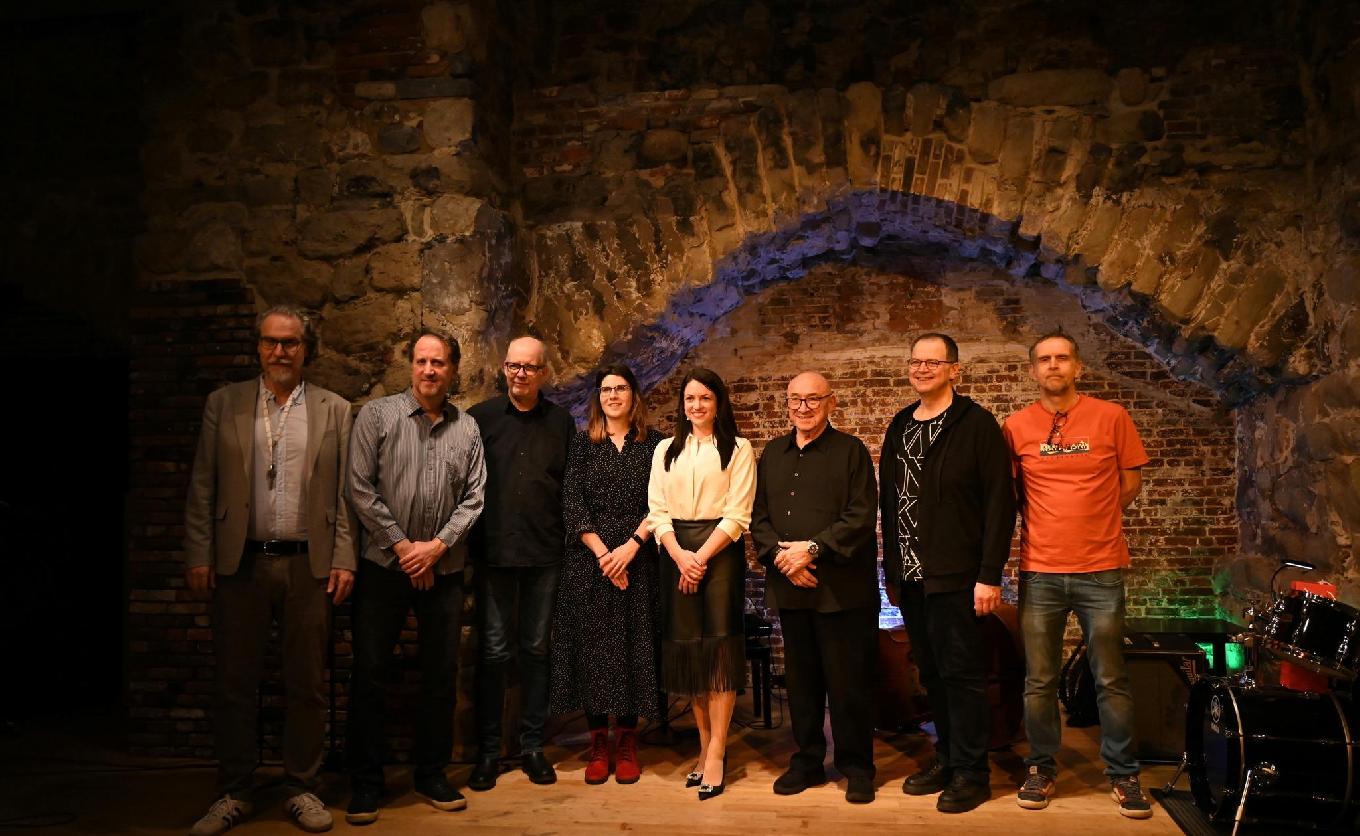
The Hungarian-Belgian Jazz Club in Brussels celebrated its 10th anniversary in February with a special concert. The guest artists at the event were Béla Szalóky and Victor da Costa. Béla Szalóky, a leading figure in Hungarian jazz, plays the trombone and numerous brass instruments, and has performed in thousands of concerts and recordings worldwide throughout his career. Victor da Costa, a guitarist born in Rio de Janeiro, is an active participant in the Belgian and European jazz scene, regularly performing with his own projects as well as alongside renowned international musicians. The permanent members of the band are saxophonist Tamás Zsári, drummer Bruno Castellucci, and double bassist Bart de Nolf. The highly successful birthday concert in front of a packed house also drew attention to the lively connections between the Hungarian and Belgian jazz scenes.
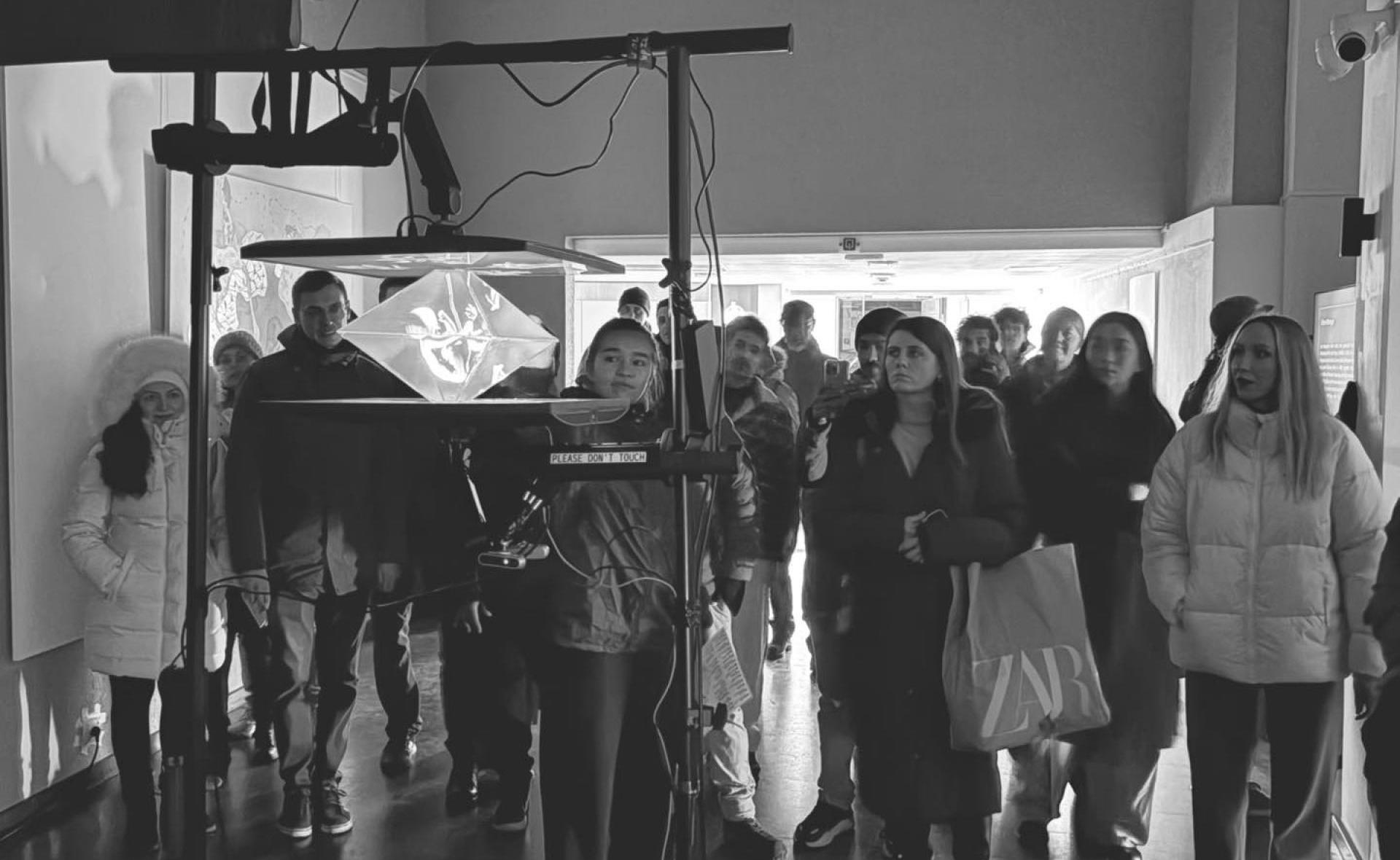
From February 12 to 15, on the occasion of the 10th anniversary of the Bright Brussels Festival, the Liszt Institute in Brussels presented its Hungarian light and video art programs, which were open to visitors every evening. One of the highlights of the program was the video-artist’s Gábor Kitzinger installation titled Crystal Womb, a truncated cone-shaped object that used Pepper's Ghost technology to create a floating, hologram-like spectacle that appeared from a distance as a chaotic, flickering cloud of particles and noisy sounds, but as the viewer approached and gestured, the image of a human embryo emerged, and the sound softened into harmonious background music, focusing on the themes of destruction and renewal, as well as empathy. As part of the festival, László Zsolt Bordos gave a presentation entitled "Light as an Artistic Medium," in which he introduced the Light Art program launched by Moholy-Nagy University of Art and Design in 2021, as well as the history of the artistic application of light and its contemporary technological possibilities. The institute joined the large-scale light festival for the fourth time, which attracted enormous interest, with an international audience of around 20,000 visitors during the event, reinforcing the international visibility of Hungarian cultural values.