Hungarian-Serbian Cultural Season Opening Festival
On October 26, 2025, the Várkert Bazár hosted the grand opening event of the Hungarian-Serbian Cultural Season, celebrating the shared cultural heritage, friendship and forward-looking cooperation between Hungary and Serbia with a full day of programs and an evening gala. The aim of the festival was to strengthen the relationship between the two nations not only on political and economic levels but also on a human and cultural level, demonstrating that Hungarians and Serbs have shared melodies, flavors and values for centuries.
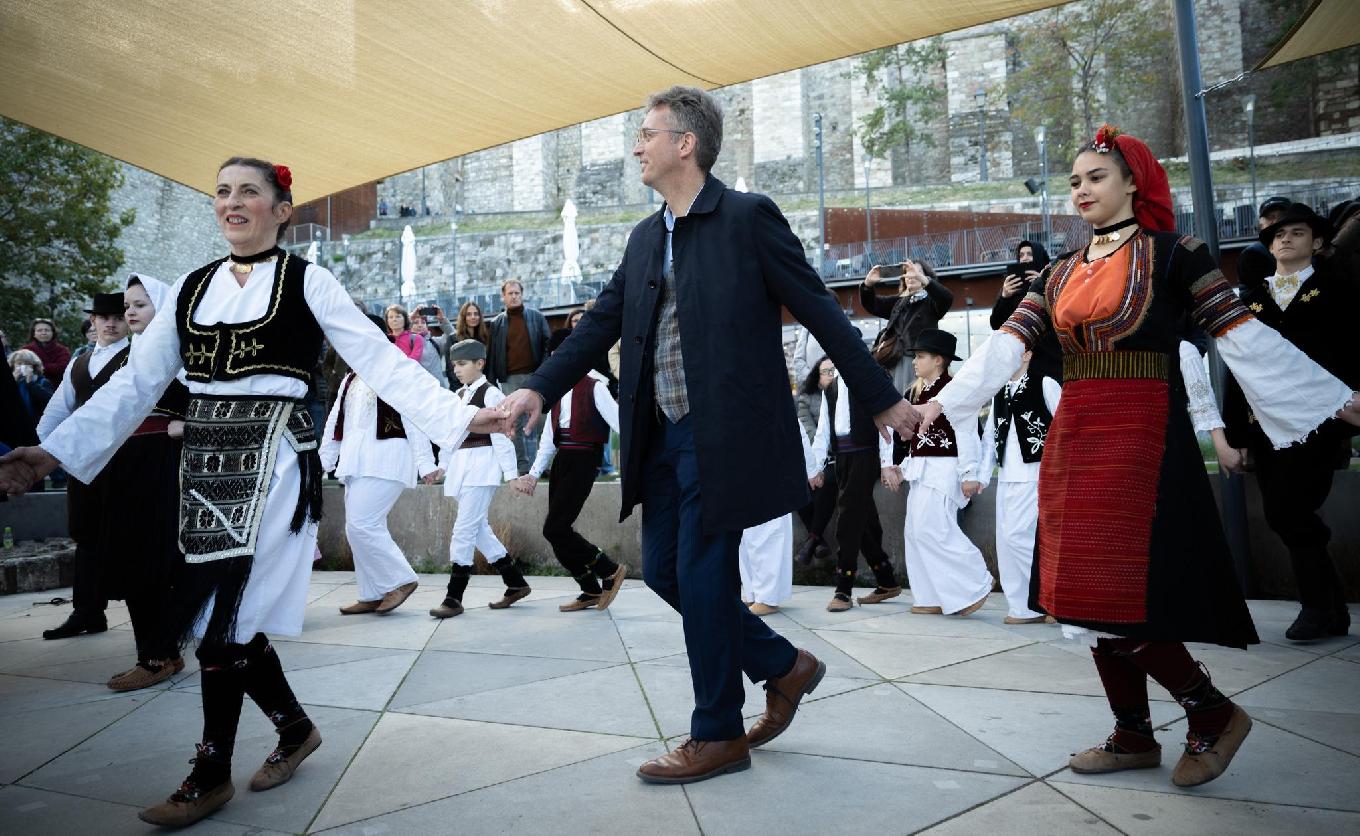
The event was organized by the Ministry of Culture and Innovation with the support of the National Cultural Fund, and its professional partners included the Hagyományok Háza, Fonó Music House Buda, and Müpa. The concept of the program draws on the shared past while opening toward new cultural and artistic collaborations, creating a bridge between Hungarian and Serbian communities across the Carpathian Basin. The festival began at 10 a.m. and took place throughout the Várkert Bazár, welcoming visitors until the afternoon with a wide variety of free programs. The day opened with a street music performance by the Subotica-based band Contrabayando on the ramp leading to the Gloriette, who revived the world of Hungarian and Carpatho-Balkan folk songs through a modern sound. In the Öntőház Courtyard, the Zagyva Band hosted a Mezőföld folk dance house, where Hungarian and Vojvodinian dancers taught traditional steps together, while in the Neo-Renaissance Garden, the stilt-walking parade of TeatRUM Trapptop brought a festive, carnival atmosphere to the audience.
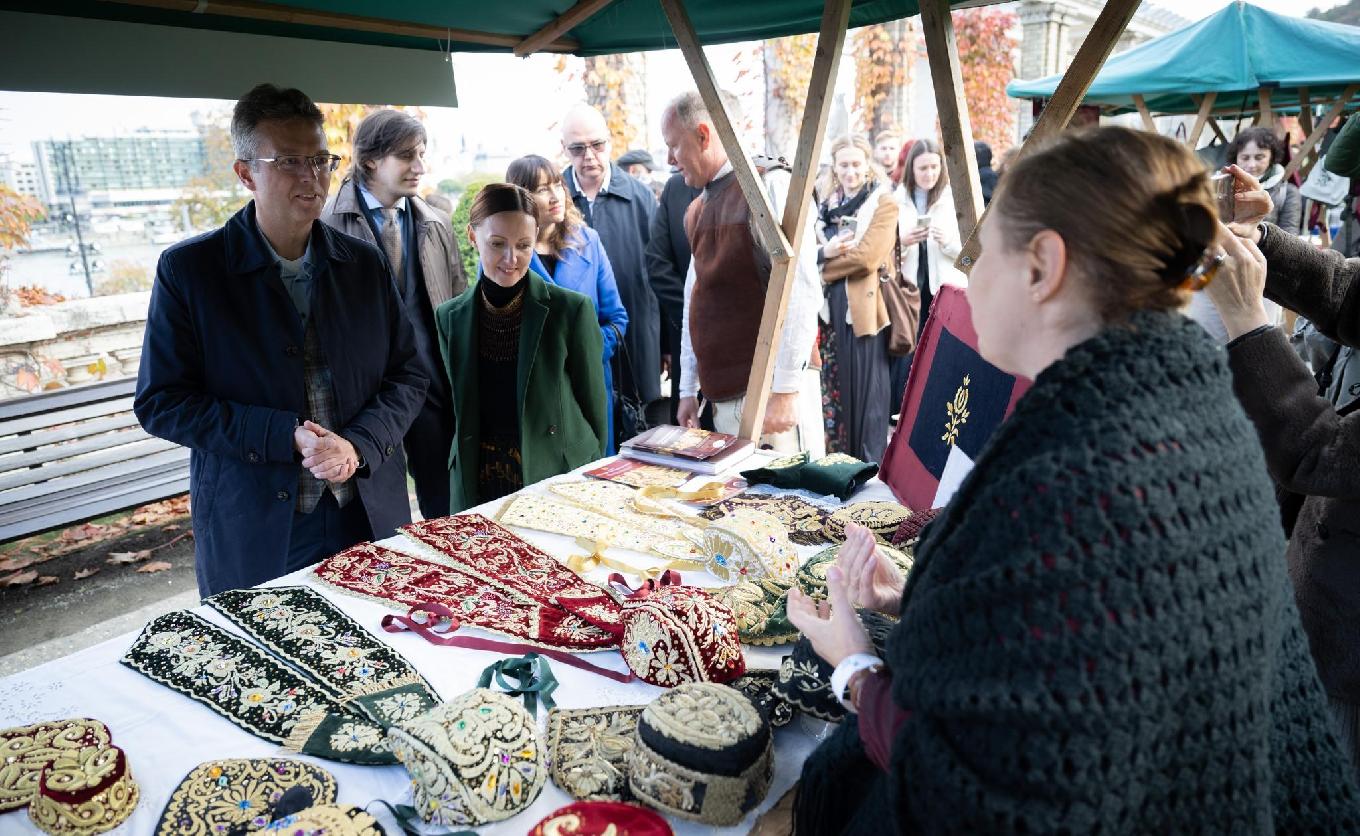
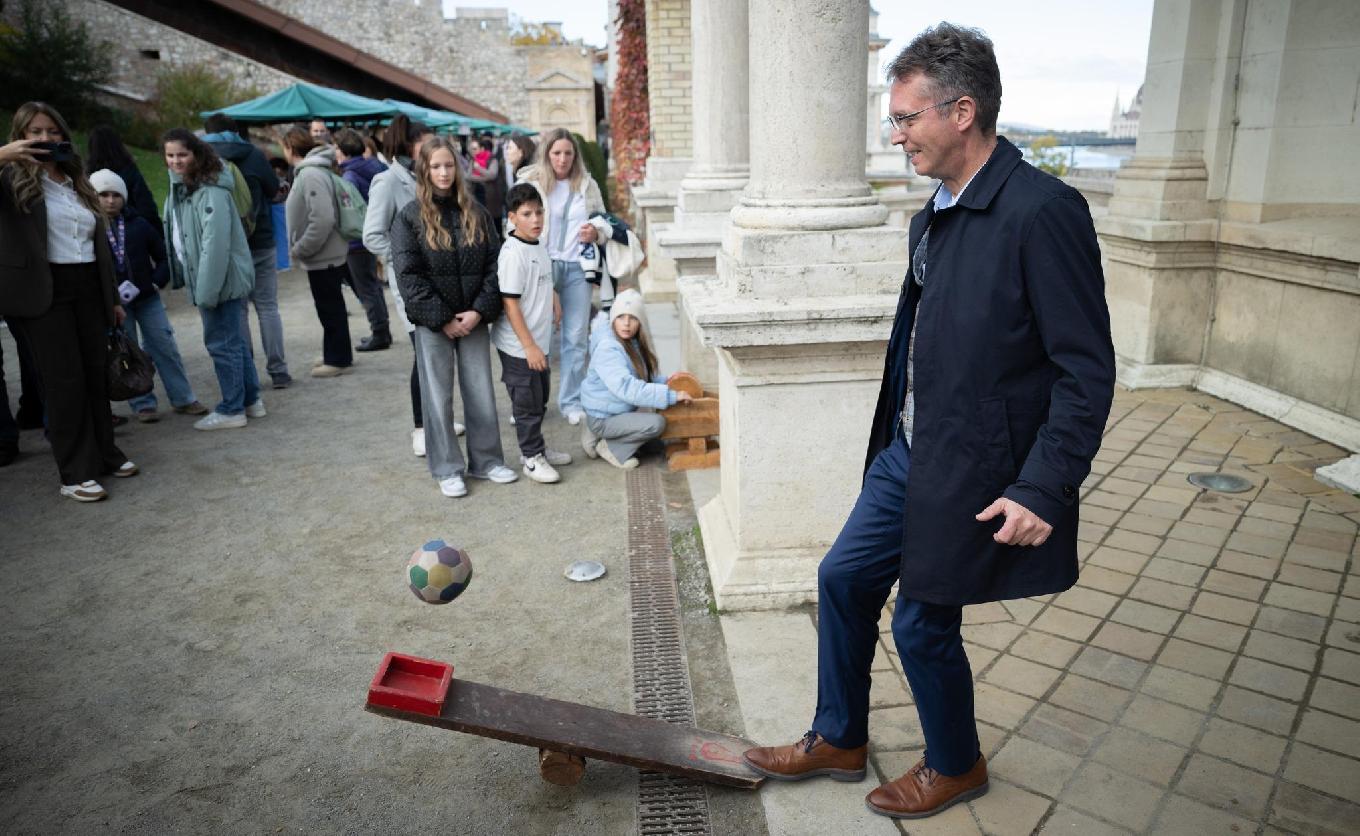
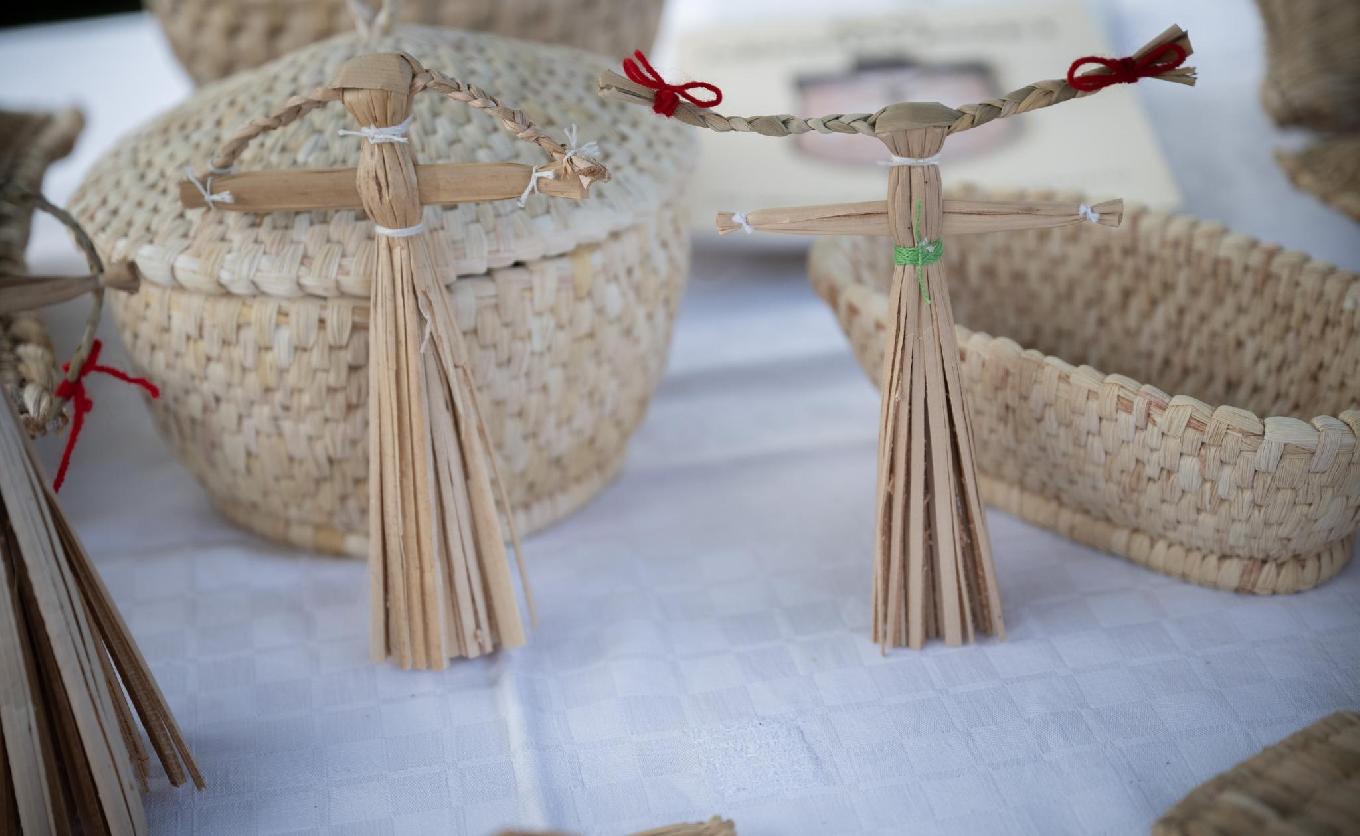
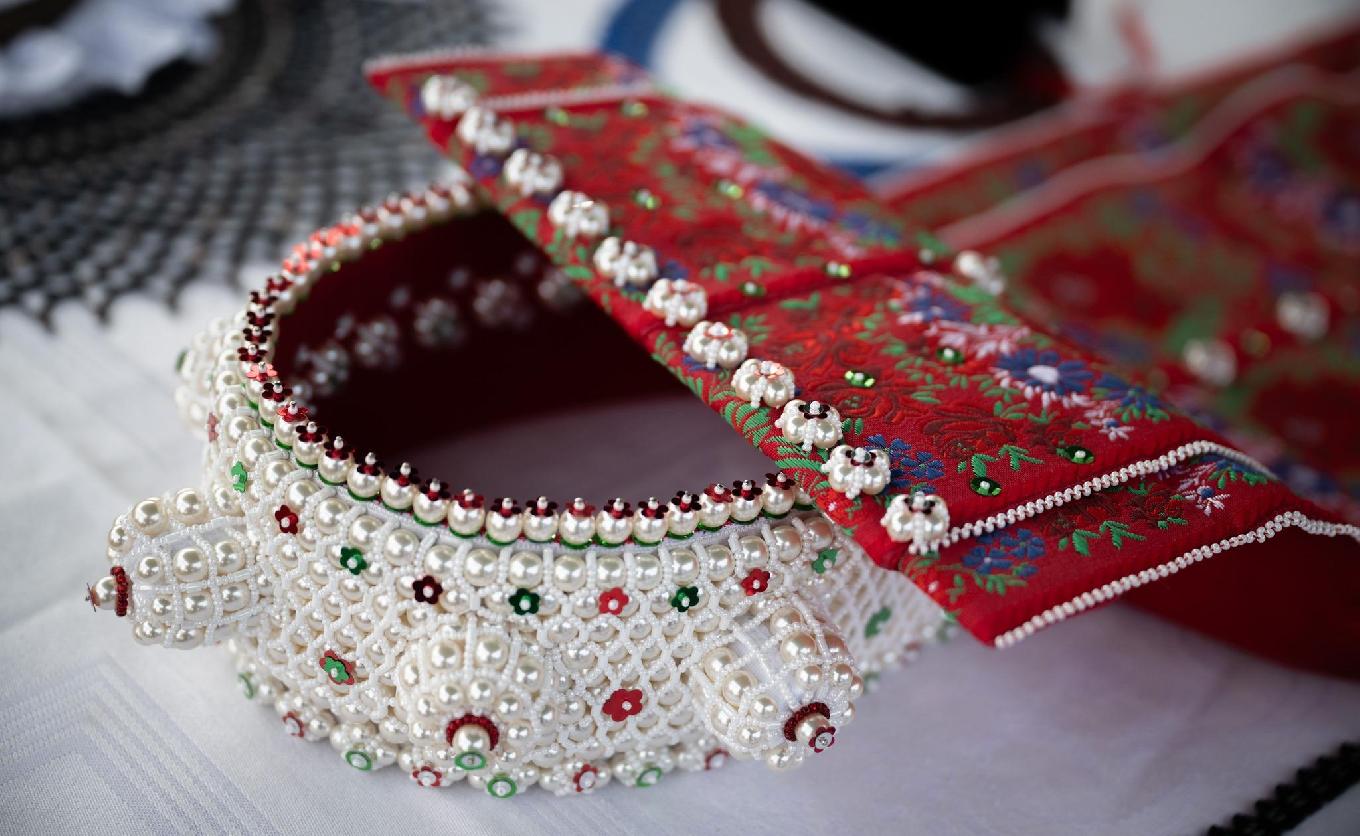
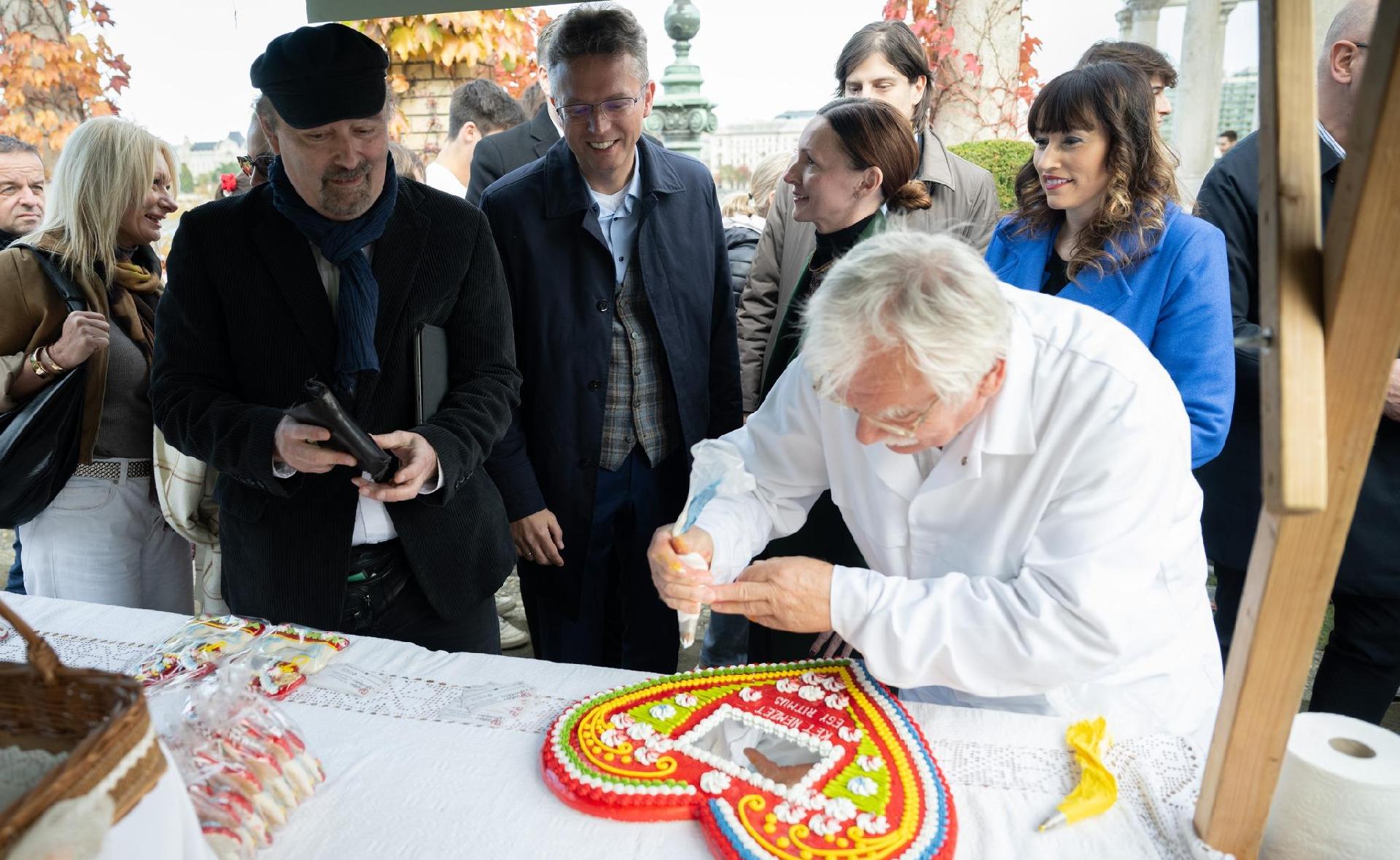
Throughout the late morning and early afternoon, the full richness of Hungarian and Serbian folk art was on display: the KOLO band from Tököl and the South Slavic Folk Dance Ensemble evoked Serbian dance traditions, while the joint performances of the Juhász band and the Óbecse Kiscimbora Dance Ensemble represented the Hungarian folk music heritage. The TeatRUM troupe reached the youngest audiences with their performance The Kidnapping of the Sun and the Moon, and one of the most heartwarming moments of the day was the Juhász band’s fairy-tale children’s concert I Already Know…, which proved highly popular among families. The heart of the festival was the Handicraft Promenade, where masters from Vojvodina and Hungary demonstrated their skills live: net-makers, weavers, slipper-makers, reed and basket weavers, gingerbread makers, and traditional costume tailors worked before the eyes of the visitors. The Merende Workshop’s wooden toy playhouse also awaited children all day, giving them the opportunity to try their hand at candle dipping, rag-doll making, felting badges, and even using a giant rope-making machine.
The afternoon programs continued with alternating dance houses and street music: performances by dancers from Deszk and Bačka, a Serbian dance house led by Slobodan Wertetics and friends, and a concert by the Deszk Band all highlighted the role of cross-border communities. To conclude the day’s open-air events, a joint Hungarian-Serbian dance finale in the Öntőház Courtyard offered the audience a chance to become part of the living tradition themselves. In the gastro courtyard, Hungarian and Serbian master chefs presented the flavors of the two nations: Balaton Grill (Róbert Mándity), NovoCatering (Antal Novotny), and Sonkamester (László Árpás) ensured that visitors could enjoy culinary delights alongside music and dance. From 3 p.m., a joint Hungarian-Serbian dance finale closed the outdoor events.
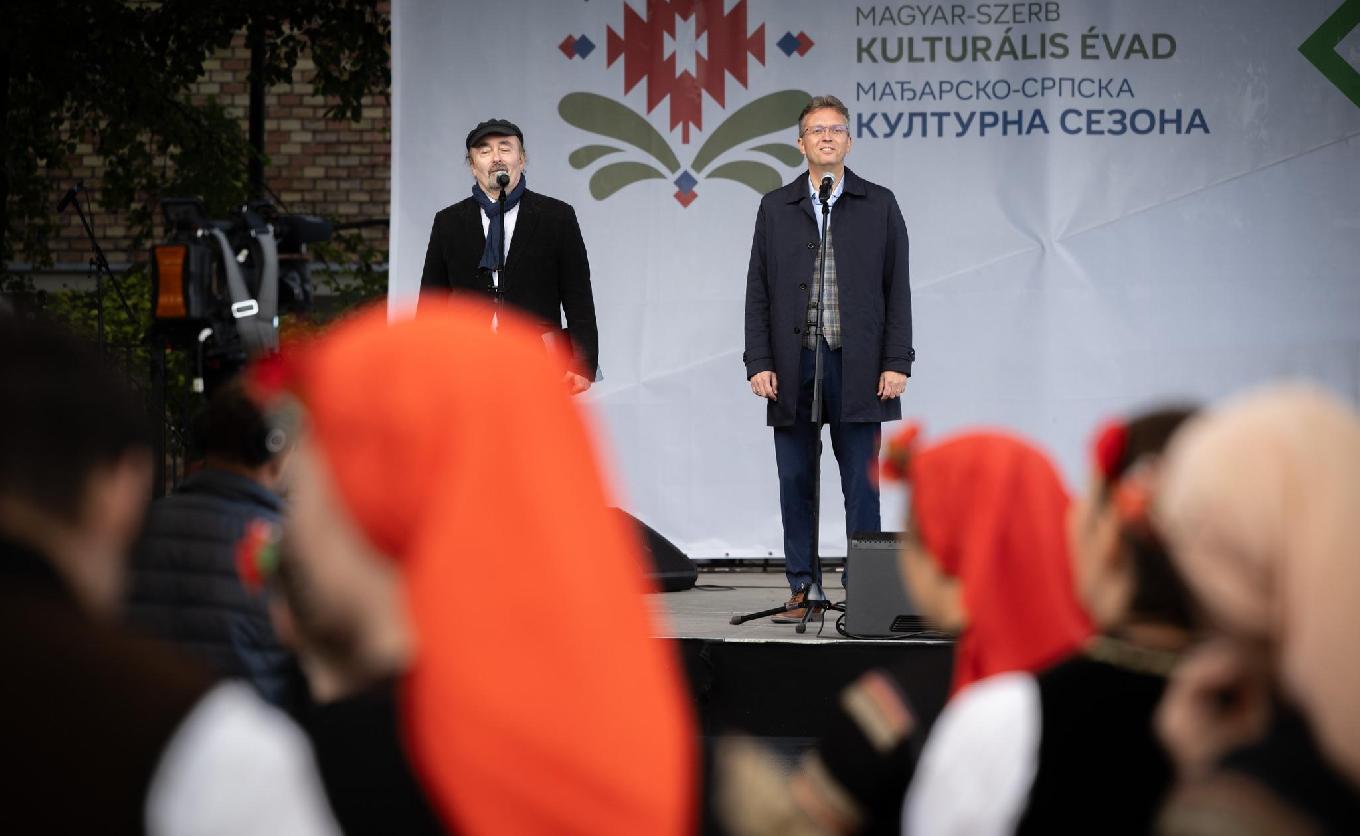
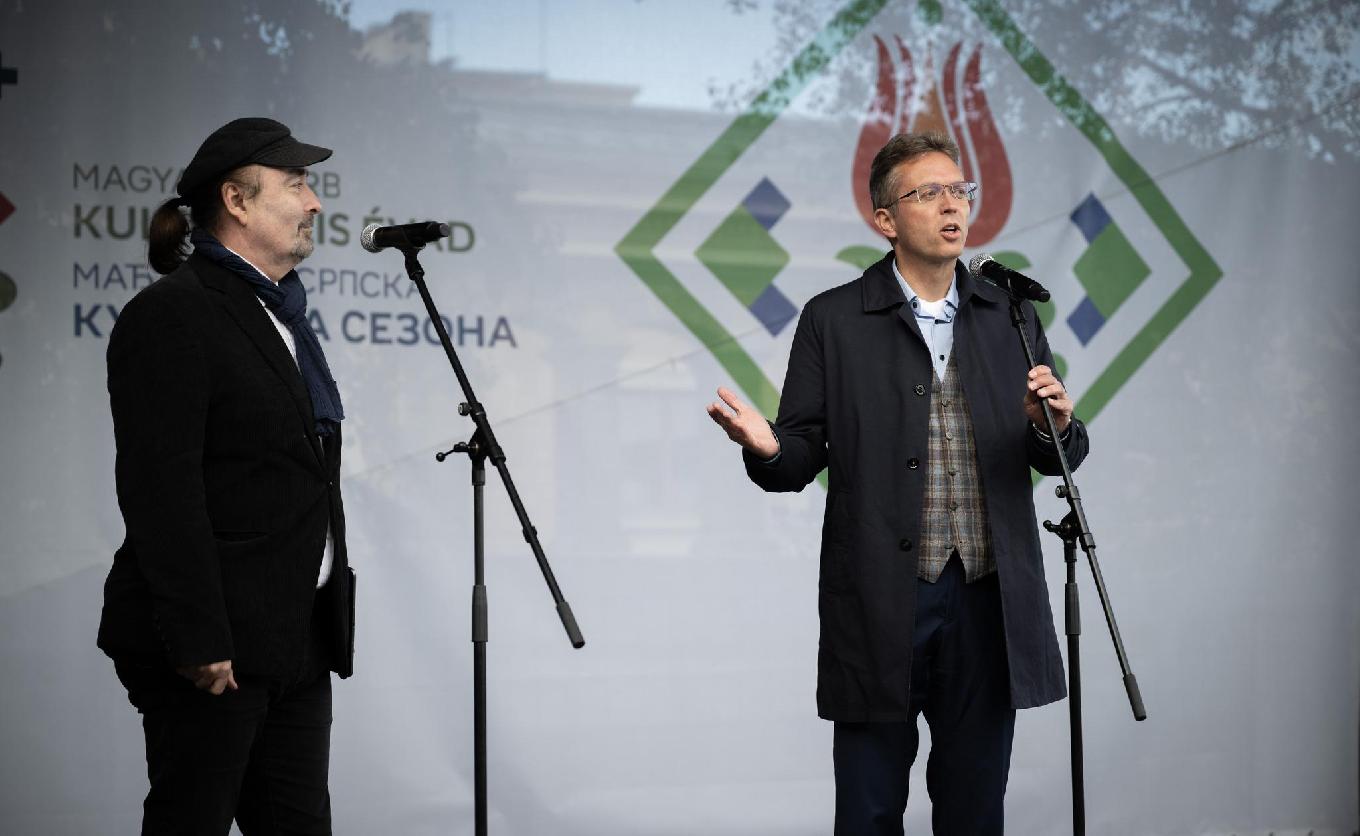
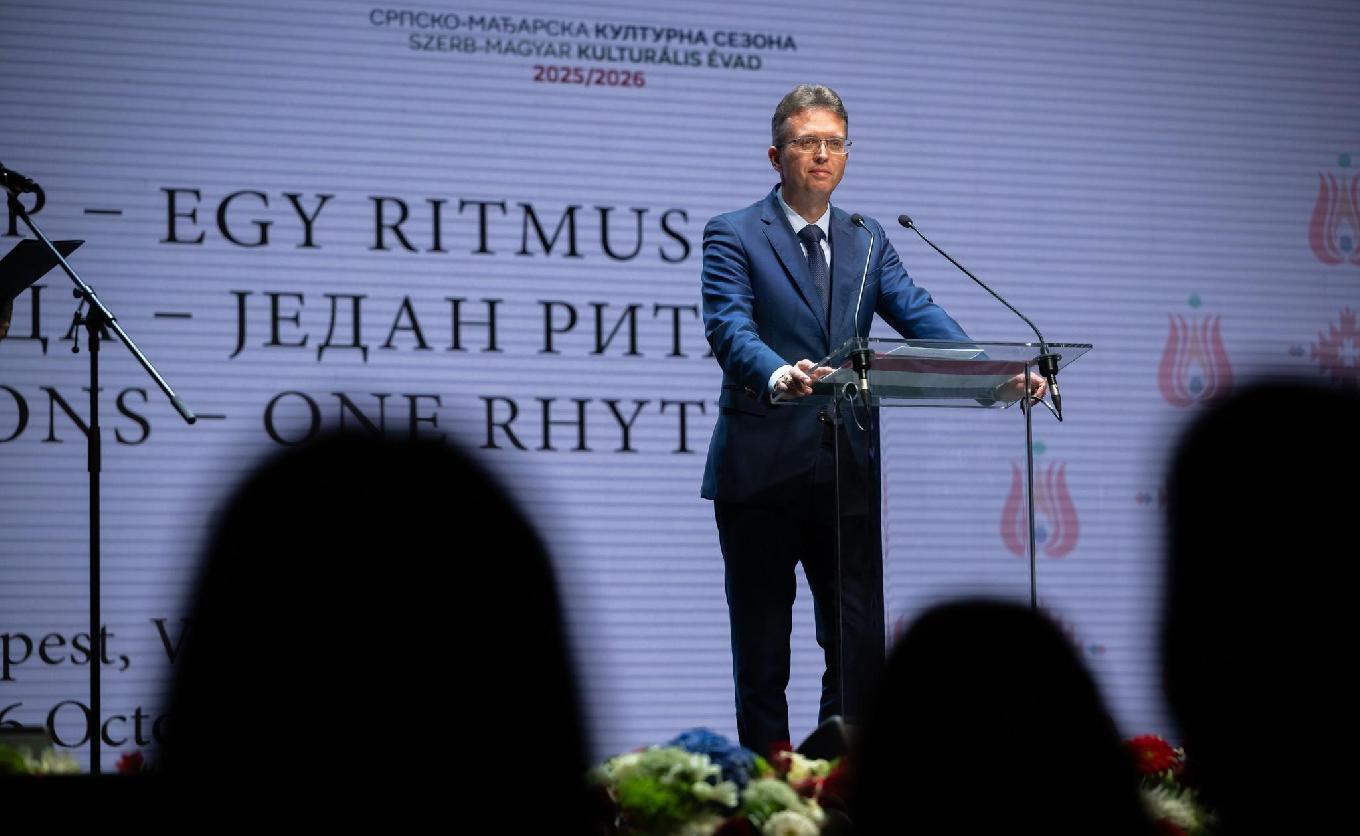
The second half of the day was devoted to the formal gala evening. From 5 p.m., invited guests arrived: Hungarian and Serbian state, municipal, and cultural leaders, representatives of diplomatic missions and artists. The gala began at 6 p.m., hosted by Gerda Seres and Milenko Rádity, with Csaba Káel as the director. Following the national anthems, welcome speeches were delivered by Balázs Hankó, Hungary’s Minister of Culture and Innovation, and Nikola Selaković, Serbia’s Minister of Culture. “Hungary’s and Serbia’s interests are so closely intertwined that, whether we like it or not, we must become friends,” quoted Minister Hankó from István Széchenyi. He added: “We are building a Europe of strong nations – one that respects and values the family as the order of the created world, the Christian faith, and national identity. In this joint cultural season, we will show that national culture does not divide, but unites.” The minister emphasized that this season is not merely a cultural series but a declaration of commitment to normality, to family, to identity, and to Christian roots. “It is a declaration of friendship and peace after difficult times, because one can never make mutual progress in war,” he said. He added that when Hungarian and Serbian artists take the stage together, they not only play music and dance, but also provide proof that the future of the two nations is built on mutual respect and friendship. Balázs Hankó also stated that the season will conclude in the summer of 2026, on the 570th anniversary of the Victory at the Siege of Nándorfehérvár, “when the bell will ring once again.” “This bell now also rings for peace, for friendship, and for a Europe founded on strong Christian faith and national identity,” he stressed.
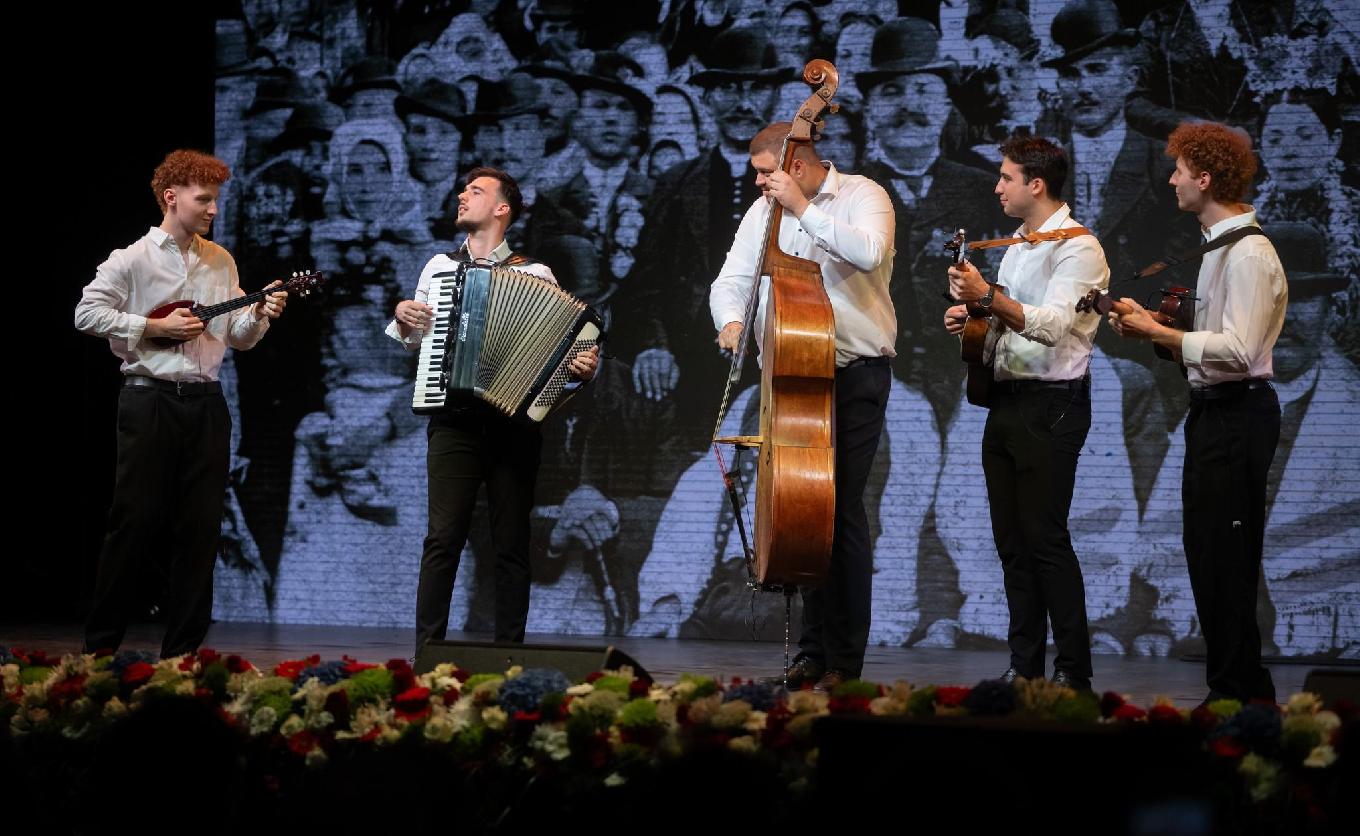
The opening act of the gala was a performance by the ViGaD ensemble. The four young and exceptionally talented musicians – Vince Eredics, Gáspár Zetelaki, Dániel Zetelaki, and Dávid Csőke – evoke the sun-soaked musical world of Serbian, Croatian, and Macedonian traditions through the dynamism of South Slavic tamburitza music and Balkan instruments. They were joined for the evening by double bassist Bendegúz Mátyás Póczos, enchanting the audience with their powerful energy and virtuosic performance. The program continued with the Saint Seraphim Orthodox Male Choir from Zrenjanin. Comprising professional singers and musicians who are key figures in the artistic life of Belgrade and Novi Sad, the choir - active for over 30 years - brought the beauty and depth of the Serbian Orthodox liturgical music tradition to Budapest. The third performers of the gala were Branka Básits and Slobodan Wertetics. With a Serbian father and a Hungarian mother, Branka’s art is shaped by the harmony of the two cultures. The Junior Prima Award-winning singer and accordion virtuoso Wertetics performed Serbian folk songs from Hungary together, including pieces from Branka’s album Én Csépem and the collections of Tihamér Vujicsics. The program then continued with István Pál „Szalonna” and His Band, musicians of the Hungarian State Folk Ensemble. Honored with the Hungarian Heritage Award, the ensemble brought some of the most beautiful melodies of the Carpathian Basin to the stage, performing folk songs from Moldavia, Felcsík, and Udvarhelyszék. Their founder and lead violinist, István Pál „Szalonna”, is a Liszt Ferenc Award-winning artist, Artistic Director and Deputy General Director of the Hungarian State Folk Ensemble. Next, István Mikó – Jászai and Emerton Prize-winning, Merited and Excellent Artist – and Milán Márk Rusz – director of the Serbian Theatre in Hungary, actor-director, and a Knight’s Cross recipient of the Hungarian Order of Merit – took the stage. Together they performed the Serbian folk song Tiho noći, moje zlato spava, symbolizing the artistic connection between the two peoples. One of the highlights of the evening was the performance by the Boban Marković Orkestar. Considered a living legend of Balkan brass music, Marković has been Serbia’s most famous trumpeter for four decades and was named the best in the world by Songlines magazine. His music is known internationally and has been immortalized in films such as Underground and Arizona Dream. Marković considers Hungary his second home, and on this occasion presented a selection of his most iconic pieces, including the world-famous Ederlezi, performed together with Branka Básits in two languages. The grand finale of the gala featured an excerpt from the dance production The Thousand-Faced Vojvodina, with the participation of the Hungarian State Folk Ensemble, Szalonna and His Band, and the KOLO band. The choreography was created by Gábor Mihályi. The performance showcased the ethnic diversity of Vojvodina – its Hungarian, Serbian, Croatian, Rusyn, Slovak, Romanian, and Romani traditions – which have enriched one another for centuries. The celebratory event concluded with a standing reception and a musical evening featuring the Juhász band, who played until late at night. The event provided a worthy close to a day dedicated to celebrating the friendship, cultural heritage and shared future of the two nations.
Thus, the Hungarian-Serbian Cultural Season Opening Festival was not merely a festive occasion, but also a symbol of the cultural interconnection between the two nations. An event built upon shared Christian roots and the values of family, identity and community, demonstrating that culture is not only a heritage, but a living bridge between nations.