

Colourful Hungarian cultural palette in Russia
The Liszt Institute Moscow is offering a colourful Hungarian cultural palette in Russia. They organised a festival showcasing young talents entitled Hungary - Russia, a musical community between the two countries, screened the cartoon Vuk, once a popular film in Russia, and persue their online language learning series, Zsákbamacska („Lucky bag”). The institute also organised a Hungarian cultural day in the city of Tver, a stand-up night in Moscow, promoted the Hungarian popular music scene at a lecture and visited the St. Petersburg State University, where it gave a lecture on Hungarian design history and a language marathon for Russian students learning Hungarian.
The musical festival promoting Hungarian-Russian talented artists entitled Hungary - Russia, the musical community of the two countries was organised jointly by the Liszt Institute Moscow, the Liszt Ferenc Music School in Moscow and the Liszt Ferenc Music School in Győr for the sixth time between 11-15 March 2024. The aim of the event was to promote the works of Hungarian composers and to foster Russian and Hungarian musical culture. A total of 35 Russian and 11 Hungarian young musicians took part in the competition. The two-day festival was intended to strengthen musical cooperation between Hungary and Russia and the intertwining of their talent development activities. The students, aged 6-15, performed works by renowned composers such as Ferenc Liszt, Béla Bartók, Edvard Grieg, W.A. Mozart, Johann Strauss and Sergei Prokofiev. The young Hungarian musicians participated in the festival programme online. More than three hundred spectators attended the event.
At the Department of Finno-Ugric Languages of the Izhevsk State University, the institute organizes monthly thematic screenings of Hungarian films in the original language for educational purposes. The film screenings are organised in cooperation with Hungarian guest lecturer Zoltán Németh and with the support of the National Film Institute. On 13 March, Attila Dargay's popular animated film Vuk was screened. Vuk, the Hungarian animated film from 1981, was based on the novel of the same title by István Fekete. Vuk was extremely popular in Russia in the 1980s, but is unfortunately less familiar to these day’s younger generation, which is why the screening was so important.
Zsákbamacska („Lucky bag”) is a monthly organised online language tutorial series aimed at developing Hungarian conversation skills. The episode of 20 March focused on Hungarian leisure activities and hobbies. The online tutorial was offered by the staff of the Liszt Institute Moscow and was accompanied by a presentation with colourful illustrations.
On 23 March, a delegation of the Liszt Institute visited the city of Tver to organise a Hungarian Cultural Day at the Relski Cluster, the city's most popular independent cultural centre. The programme included a lecture on the history of Hungarian design, the opening of the "Let's learn Hungarian" typography exhibition and the "Hungarian city names" poster exhibition, as well as a selection of contemporary Hungarian music and tourism promotional videos. The audience was also treated to an interactive gastronomic demonstration of Hungarian food including pogácsa (scone), zserbó (Gerbeaud cake) and rétes (strudel).
The Liszt Institute Moscow organised a Hungarian stand-up evening at the Szloni i Mamonti bar for the Hungarian-speaking public and for those who are interested in Hungarian culture on 26 March 2024. This genre of entertainment is very popular in Russia. The aim of the programme was to increase the number of people interested in Hungarian culture by creating a relaxed atmosphere using humour. At the event, participants performed comic stories from their lives with Hungarian connections.
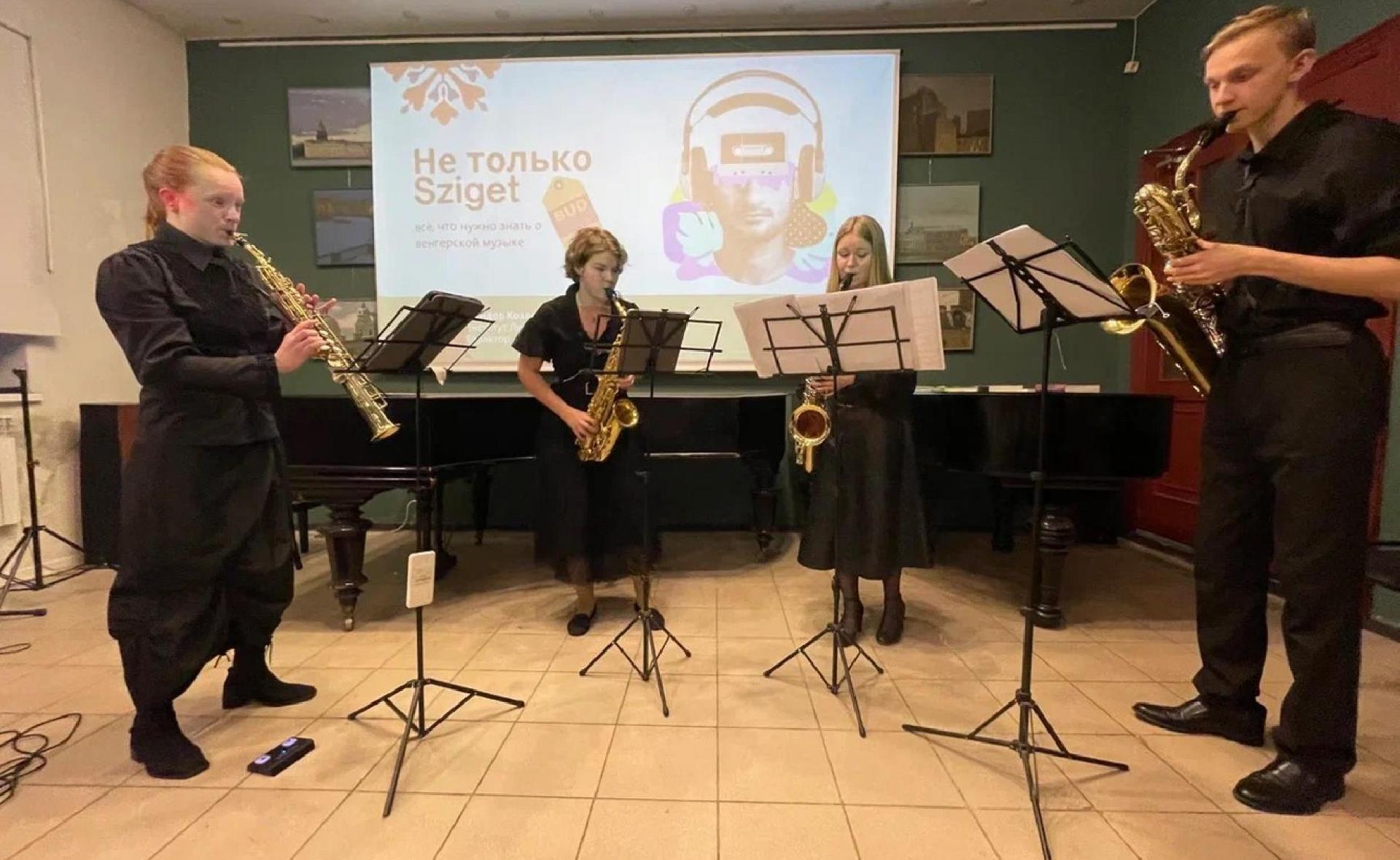
As part of the Underrated programme, Hungarian popular music educational materials are published on Russian media platforms and on the social media pages of the Liszt Institute Moscow. The aim of the publication is to present and promote the Hungarian popular music scene. On 2 April, the presentation "Not only Sziget: everything you need to know about contemporary Hungarian music" provided information on the characteristics, origins and iconic names of Hungarian music. The performance included György Ligeti's Six Bagatelles for Wind Quintet performed by Serafima Verholat's wind quartet, followed by Zoltán Kodály's sonatas by Yekaterina Travkina, cellist at the Mariinsky Theatre. The programme was organised in cooperation with the Consulate General of Hungary in St. Petersburg.
Following the programme, on 3 April, the Liszt Institute Moscow visited the State University of St. Petersburg, where Sándor Kozlov, director of the Institute and Dorottya Dolovai guest lecturer gave a lecture on the history of Hungarian design and held a language marathon for Hungarian leraning Russian students. The Stipendium Hungaricum scholarship programme was also presented to the students of the Hungarian Department by Nataliya Gyjacsenko. The event was organised in cooperation with the Consulate General of Hungary in St. Petersburg.