

10 Treurenberg, 1000 Brussels
Bright Brussels Festival celebrates its 10th anniversary from 12 to 15 February 2026!
For 10 years now, the Bright Brussels Festival has been lighting up your winter evenings! And for this anniversary edition, we’re going all out: a majestic illuminated trail through the historic centre of the capital, from 12 to 15 February 2026.
Over four magical nights, more than twenty luminous artworks and just as many sparkling activities will guide you from Brussels Park to the Royal Theatre of La Monnaie, passing by numerous heritage landmarks along the way. From 18:30 to 23:00, Brussels’ heart will once again be transformed into a fairytale journey, brought to life by the creativity of Belgian and international artists.
In addition to this extraordinary route, uncover real gems at the Bright Brussels Market, have fun with your little ones at Bright Brussels Kids and take a delicious break at the Bright Brussels Café.
Get ready for an unforgettable nocturnal journey, filled with poetic moments and the true spirit of Brussels!
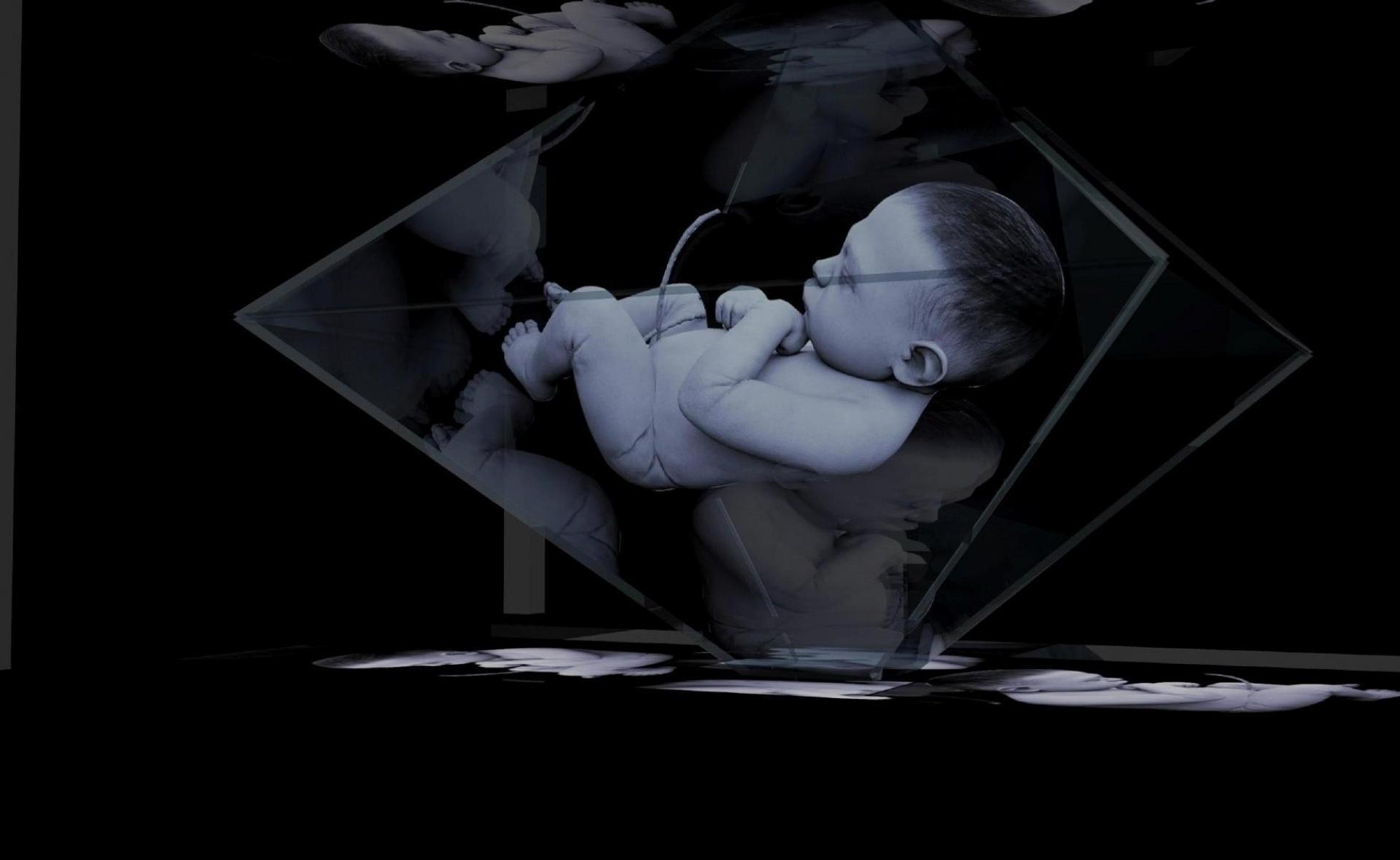
Crystal Womb by Gábor Kitzinger
Gábor Kitzinger is a Hungarian video artist, who graduated from the Moholy-Nagy University of Art and Design (MOME) in 2005. He is a member of the Hungarian visuals studio, Glowing Bulbs. He began vjing in the early 2000’s and joined Glowing Bulbs in 2006; together they designed several large-scale architectural mappings and did numerous vj performances around the globe. For his solo video art, music videos and sound-reactive A/V shows he creates abstract and colourful 3D animations, while often appears at exhibitions with his stylistically similar sculptures and paintings.
For examples of his projects, please visit gaborkitzinger.com. For examples of his projects with Glowing Bulbs, please visit glowingbulbs.com.
Concept
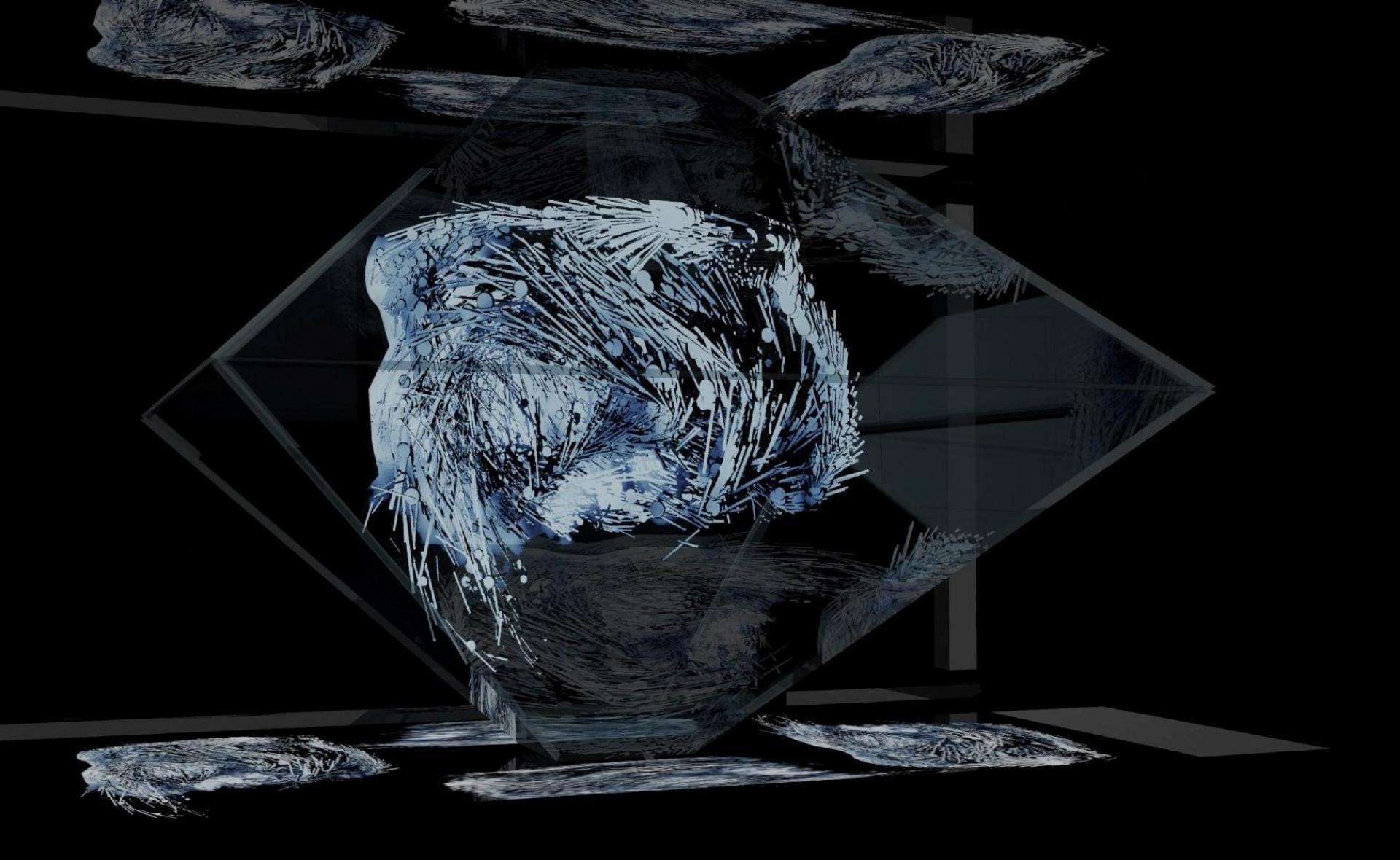
The centre of this installation is a Square Bifrustum. With this geometric object, we slice out a piece from a parallel virtual reality and make it visible in our time and space. The live-generated video content of this parallel reality is recorded by eight virtual cameras from eight different viewing angles. The pictures are then streamed on two TV screens that project an image onto all eight sides of the Square Bifrustum, thereby creating the illusion of a levitating three dimensional hologram. This projection technique is an advanced adaptation of a Victorian stage effect, called the Pepper's Ghost hologram.
During an intimate performance on Christmas Eve of 1862, Prof. John Henry Pepper amazed a group of Londoners with a skeleton on stage in a strange transparent quality. The trick was not wholly new. Giambattista della Porta mentioned the phenomenon in his 16th-century book, Magia Naturalis (Natural Magic). The point was to make an object behind a person appear as though it was in front of them. Pepper partnered with an engineer, Henry Dircks to set the illusion easily adaptable to stage, so they situated the actor in the orchestra pit, then tilted the pane of glass 45 degrees toward the audience while simultaneously matching the actor's angle on a board so he could be more easily obscured.
The visitor’s experience is bipolar, as the installation is divided into two completely different stages.. Observing from a distance, we experience a disturbing, rapidly moving, vivid, flashy particle simulation in the Bifustrum, paired with loud, noisy sound design. However, upon approaching the installation and engaging with the hand sensor (leap motion), we can start interacting with the object. At that moment, the chaotic particle cloud suddenly dissolves, and a full-grown human embryo appears, which seems nervous and shaky at first, but if we stay long enough, it calms down, opens its eyes, slowly starts following our hand gestures and begins interacting in a nonverbal way. The first hand gesture immediately halts the disturbing noise of the previous stage, after which a relaxing ambient sound starts playing that we can also control with the hand sensor.
The disturbing particle stage of the installation represents chaos, loneliness, desolation and destruction, while the embryo stage represents innocence, fragility, a new beginning, and some form of a clean, uncorrupted state of existence. If we stop engaging with the installation, the embryo becomes nervous and rapidly wiggles until the chaotic particle system takes over again, and we arrive back at the disturbing stage.
The installation encourages us to nurture the embryo and prevent it from becoming a chaotic, noisy particle entity. The longer we engage and keep it virtually “warm” with our hands, the more it reacts to our gestures and starts learning its surroundings. The installation traps the visitor in a high empathy mental state.
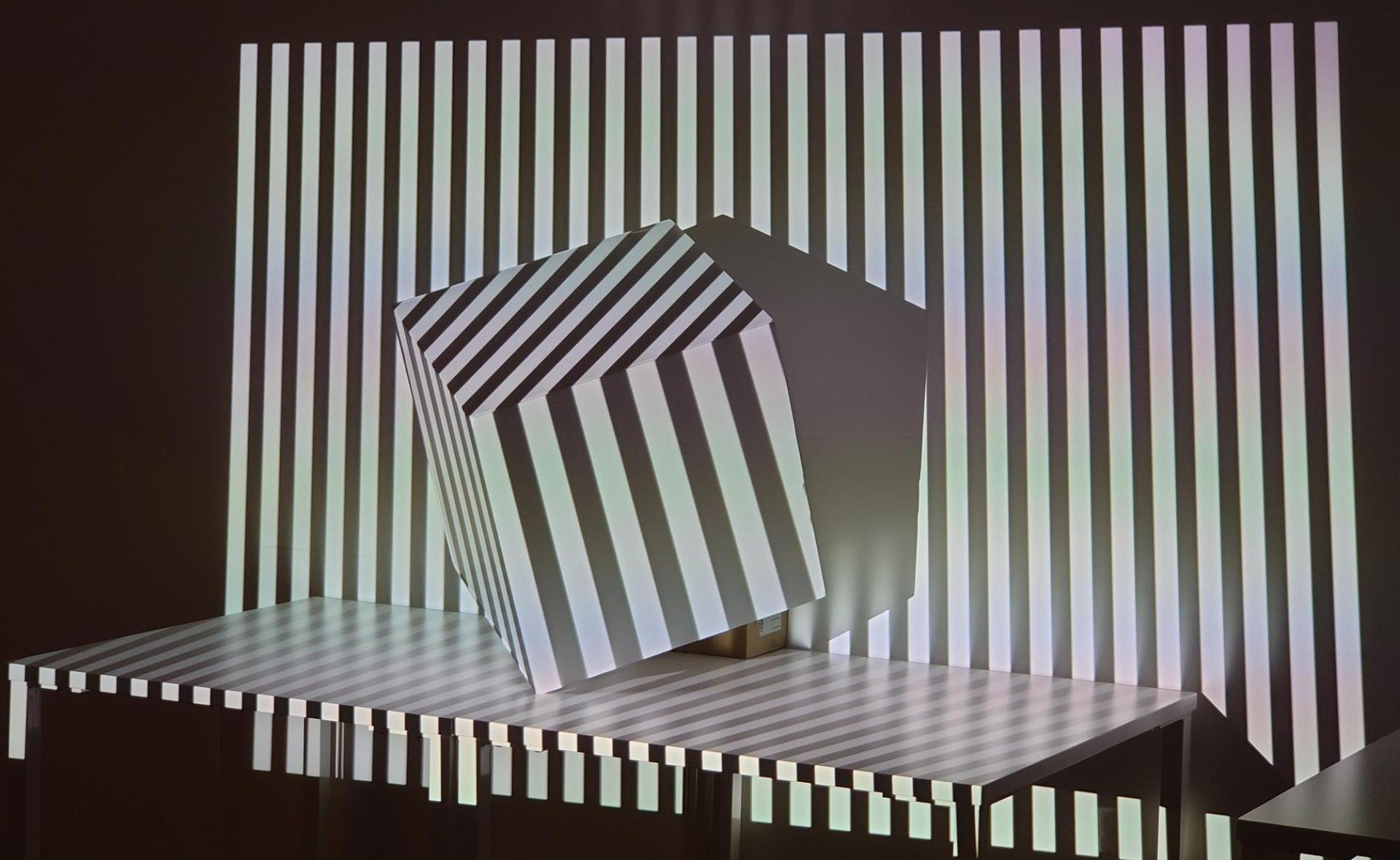
14 February 2026 - 18:30 - Light as an Artistic Medium: Inside the MOME Light Art Course
At Bright Festival Brussels, light artist László Zsolt Bordos presents the Light Art Course he founded in 2021 at the Moholy-Nagy University of Art and Design (MOME) in Budapest. The lecture offers insight into a unique educational program that combines light art history, perception science, and hands-on training in projection mapping, holography, LED, laser, and real-time visual systems. Rooted in the legacy of Moholy-Nagy and extending into contemporary digital practices, the course explores light as material, medium, and cultural language in the 21st century.