

17-19 Cockspur St, London SW1Y 5BL
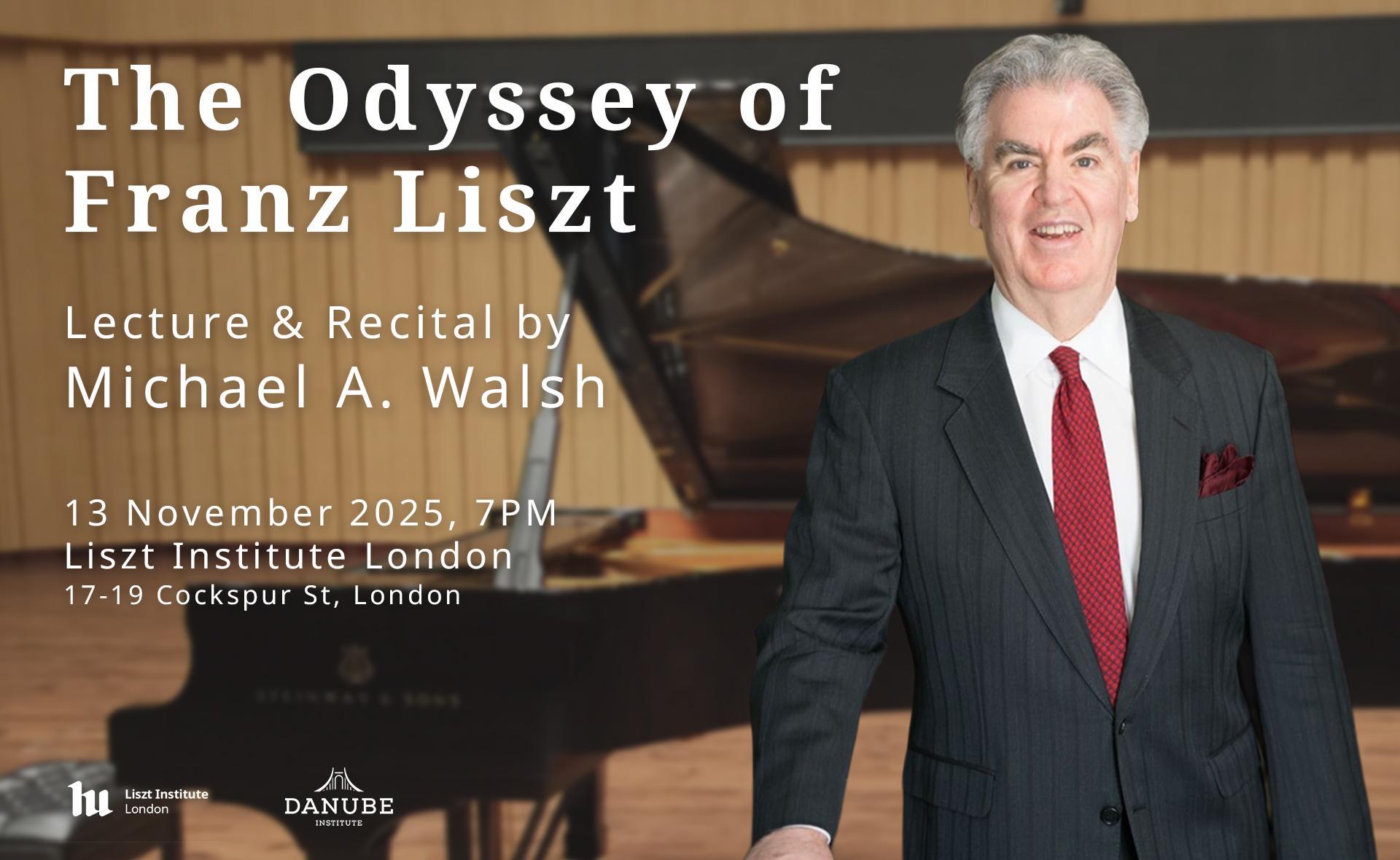
Join us for an engaging lecture and piano recital by Michael A. Walsh, exploring the final years of Franz Liszt’s life and music.
In his later years, the famous Hungarian pianist and composer (1811–1886) left behind the dazzling virtuosity and stormy personal life of his youth, turning towards religious reflection.
This change in Liszt’s life was reflected in his music. The bold, showy style of the Hungarian Rhapsodies and the B minor Sonata gave way to pieces that are simpler, more thoughtful, and sometimes mysterious. These late works hint at ideas that would later appear in the music of Debussy and Schoenberg.
In the lecture, Michael A. Walsh will explore:
- Liszt’s personal and spiritual transformation in his final decades;
- How his music changed in style and expression;
- How these late works reflect themes of mortality, faith, and the future of music.
The recital will feature a selection of Liszt’s last compositions — spare, haunting, and full of depth — offering listeners a chance to experience his music in a new and intimate way.
Programme:
- Liszt, Transcendental Etude No. 1
- Liszt, Five Hungarian Folksongs
- Liszt: The Chapel of William Tell (Annees de pelerinage, Bk 1
- Wagner: Album-Sonata in A-flat (for Mathilde Wesendonck)
- Liszt: Angelus! Prière aux anges gardiens (Annees, Bk 3)
- Liszt: Cypresses of the Villa d'Este II (Annees, Bk 3)
- Liszt: Mephisto Waltz #4 (completed by Michael A. Walsh)
- Liszt: Sursum Corda (Annees, Book 3)
About the performer
Michael A. Walsh is an American author, music critic, and lecturer, known for his writings on classical music and culture. He has served as a critic for Time Magazine and frequently gives lecture‑recitals that explore the lives and works of composers, bringing historical context and insight to audiences.
In his lectures on Liszt, Walsh combines thoughtful commentary with performance, highlighting how the composer moved beyond virtuosic showpieces to create deeply introspective and forward‑looking works.
This event is possible with the generous support of the Danube Institute.